 Growney
Why is it summer in Australia in December? Explain it to a child

When there is snow outside and the news shows people in Australia swimming in the sea, a child will ask how that can be. The answer lies in the way the Earth travels around the Sun. You can explain it in an evening and show it in ten minutes.
The answer in one sentence
The Earth is slightly tilted
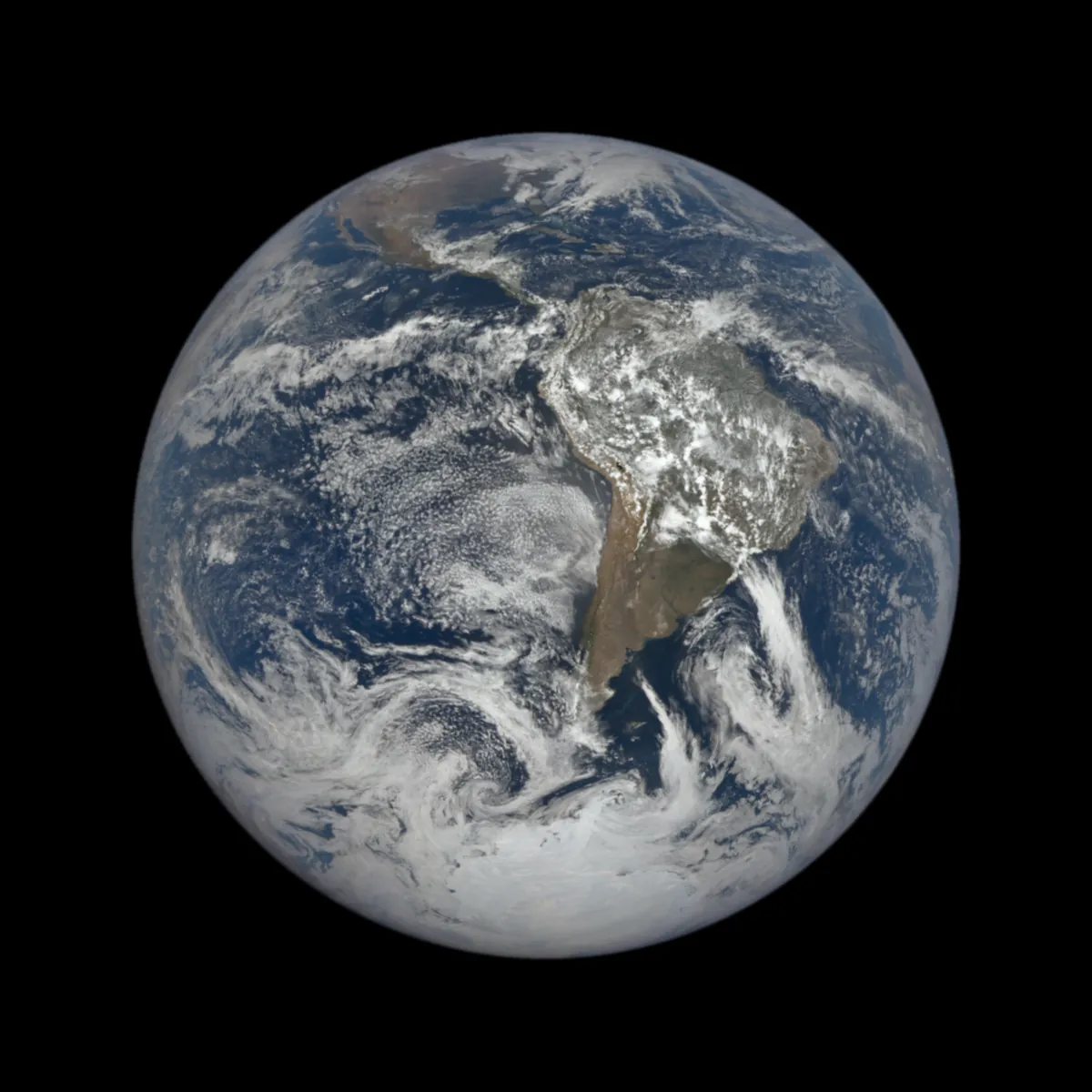
Picture a spinning top that turns at a slight angle. The Earth spins around an imaginary axis that runs through the North and South Poles. That axis is tilted by about 23.5 degrees. All year round, it points the same way in space.
The Earth goes once around the Sun every year. In June, the northern half of the planet, where Britain and most of Europe are, leans towards the Sun. We have summer then, and Australia has winter. Six months later, the Earth is on the other side of the Sun. The axis still points the same way, so now the southern half leans towards the Sun. Around 21 December, Australia has its longest day of the year, and we have our shortest.
Australian meteorologists count summer from 1 December to the end of February. So Christmas and New Year fall in the warmest season there.

Why the tilt makes it warmer or colder
The tilt changes two things. The first is how high the Sun climbs. In summer, it rises high, and its rays hit the ground almost straight on. In winter, the Sun stays low, and the same light spreads over a bigger area, so each patch of ground gets less warmth.
The second is the length of the day. The half of the Earth that leans towards the Sun has long days and short nights. The Sun warms the ground for longer, and there is little time for it to cool. In December, that happens in Australia, and in June, it happens here.
Is the Earth further from the Sun in December?
Plenty of adults think so, which makes it a good question to test yourselves with. In fact, the Earth is closest to the Sun in early January, about 147 million kilometres away. It is furthest in early July, about 152 million kilometres away. So our winter falls just when the Sun is closest. NASA explains that the distance to the Sun does not decide the seasons. If it did, the whole planet would have winter at the same time.
The lamp and orange experiment
The tilt is easier to see once than to explain ten times. You will need an orange, a wooden skewer, two stickers, and a desk lamp.
- Push the skewer through the orange from top to bottom. This is the Earth's axis.
- Mark the poles with a felt tip and put on two stickers, one above the middle (your town) and one below it (Australia).
- Stand a lamp without a shade on the table and switch off the main light. The lamp is the Sun.
- Tilt the skewer a little to one side, roughly like a clock hand pointing at one o'clock.
- Slowly carry the orange in a circle around the lamp. Keep the skewer pointing at the same wall the whole time.
- Stop on one side and then on the other. Ask your child which sticker the lamp lights up better. That place is having summer.
- Now hold the skewer straight up and go round again. Both stickers get the same light all year. Ask your child whether there would still be winter and summer.
Christmas under the midnight Sun


Further south than Australia lies Antarctica. At Australia's research stations on the coast, the expeditioners spend Christmas under a Sun that does not set for about two weeks. Near the South Pole itself, a summer day lasts several months in a row. In winter, the night there lasts for months.
In the tropical north of Australia, meteorologists count just two seasons. The wet season runs from October to April, and the dry season from May to September. Get out a globe with your child and look for other places where the seasons are nothing like ours.