 Growney
How to say hello in ten languages. A travel game to play at home

Children are quick to notice that people in cartoons and on holiday greet each other in entirely different ways. Someone says "bonjour," someone respectfully bows, and someone else touches noses. Greetings are incredibly easy to remember, and they are the perfect excuse to take a trip around the world without ever leaving your living room.
The one-sentence answer
How many languages are there in the world?
Ethnologue, a comprehensive catalogue of the world's languages, currently counts 7,170 living languages. Papua New Guinea boasts the most, with over 840 distinct languages. If you set out to learn just one greeting a day, nineteen years still wouldn't be enough time to cover them all.
Here are ten greetings to fuel your home travel game:
- English. Hello.
- Ukrainian. Привіт (pry-VEET).
- Polish. Cześć (cheshch). The PWN dictionary notes that this exact word also translates to "respect."
- French. Bonjour (bon-ZHOOR), which literally means "good day."
- Spanish. Hola (OH-lah). This is typically how you greet friends and family.
- Italian. Ciao (chow).
- Japanese. Konnichiwa (kon-nee-chee-wah).
- Hindi. Namaste (nuh-muh-stay).
- Māori. Kia ora (kee-ah OR-ah).
- Zulu. Sawubona (sah-woo-BOH-nah).
What hides inside these words
The Italian "ciao" used to sound incredibly formal. The Treccani dictionary explains that it stems from the Venetian phrase "s-ciao," meaning "your servant." Centuries ago in Venice, this was a highly polite greeting; today, it is the most casual, friendly hello you can use.
The English "hello" began its life as a simple shout used to get someone's attention from a distance. It owes its modern fame entirely to the telephone. According to the etymology dictionary Etymonline, telephone inventor Alexander Graham Bell originally wanted people to answer calls with the sailor's greeting "ahoy." "Hello" ultimately won out, and by 1880, female telephone operators were famously nicknamed "hello-girls."
The Māori "kia ora" translates literally to "be well." The Te Aka dictionary explains that it functions as a greeting but can also be used to say thank you. The Zulu "sawubona," according to the Dictionary of South African English, carries the beautiful meaning of "we see you." In Japanese, the greeting shifts depending on the time of day: in the morning, people say "ohayo," during the day it’s "konnichiwa," and in the evening, "konbanwa."
Greeting without words


In India, when saying "namaste," people press their palms together in front of their chest and bow their heads slightly. Merriam-Webster notes that the word originates from Sanskrit and simply means "a bow to you."
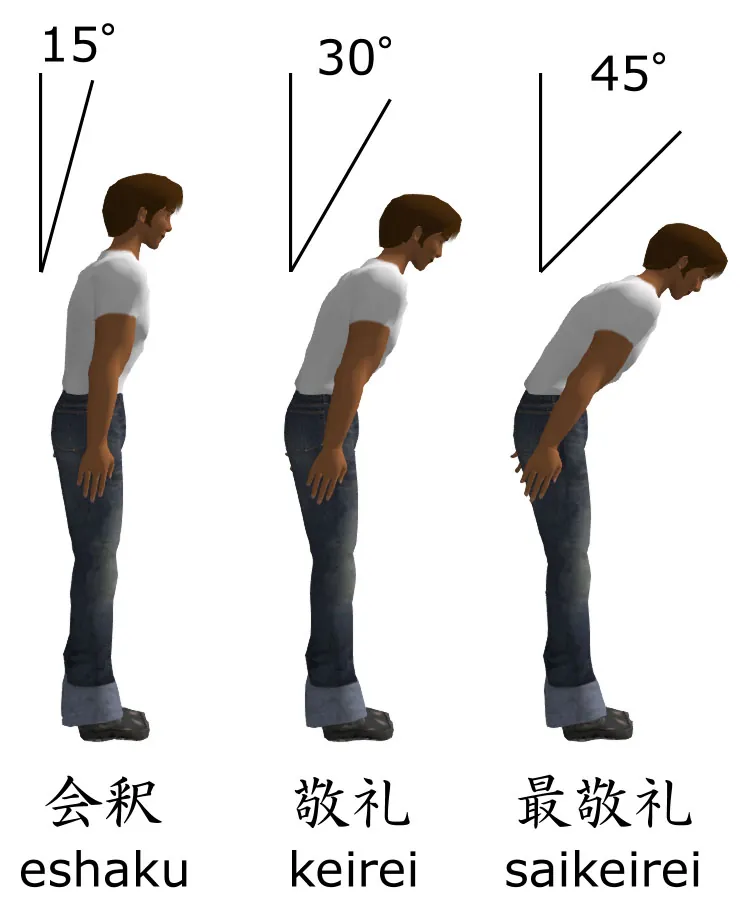
In Japan, bowing replaces the traditional handshake. The Japan National Tourism Organization outlines three distinct bows: a light bow of about 15 degrees for everyday greetings; a deeper, 30-degree bow for guests and elders; and the deepest, 45-degree bow, reserved for profound gratitude or a sincere apology.
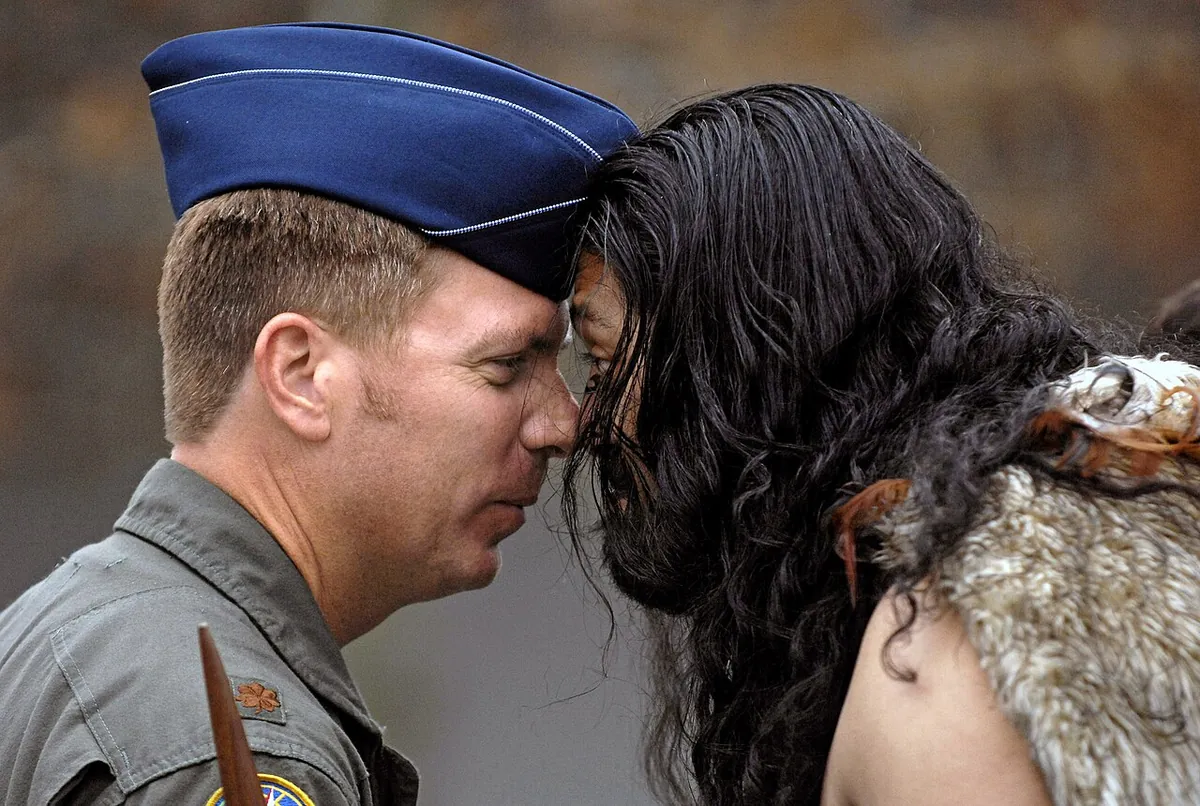
In New Zealand, the Māori people greet one another with the hongi. Te Ara, the encyclopedia of New Zealand, describes the ceremony: individuals bend their heads, lower or close their eyes, and press their noses together once or twice. The hongi concludes the formal welcome ceremony for guests, signifying that both parties have met in peace.
The living room travel game

A new word is much easier for a child to remember when it is paired with a physical movement and a short story. Don't worry if the pronunciation isn't flawless—the primary goal is to have fun. Along the way, your child will learn that different cultures have their own fascinating customs that deserve respect.
- Make passports. Fold a blank sheet of paper in half. Have your child draw a self-portrait on the cover and write their name.
- Set up your countries. Place sheets of paper featuring a country's name and a drawing of its flag in different rooms. The kitchen can be Italy, while the hallway transforms into Japan.
- Set off on your journey. Hold hands and travel by "train" from room to room.
- Greet like the locals. In each "country," the adult demonstrates how people say hello there, and the child mimics the word and the gesture. Bow in Japan, press your palms together in India, and gently touch noses in New Zealand.
- Stamp the passports. For every successfully completed greeting, the child earns a sticker or a small doodle in their passport.
- Bedtime recap. At the end of the day, ask your child to greet you "in Japanese" or "in Italian" to see how many words stuck.
This game is incredibly easy to expand upon the following day. Simply add new countries to your route, or try learning how to say "thank you" in each of the languages.
One more amazing fact
The Māori people trace the hongi greeting back to a beautiful ancient legend. Te Ara tells the story of the god Tāne, who moulded the first woman from the earth and breathed life into her through her nose. So, when people touch noses during a hongi, they are symbolically sharing the breath of life. Our world is full of rich stories just like this one, and behind every "hello" lies a culture waiting to be discovered together.