 Growney
Why do countries have different times? Explaining it to a child

A child calls a grandparent abroad only to find out it is already the middle of the night there. Or they notice at the airport that the local clocks show a completely different time than the ones at home. This naturally leads to the question: why isn’t the time the same everywhere? The answer lies in how the Earth spins, and you can easily demonstrate it using a simple desk lamp.
The one-sentence answer
The Earth as a carousel
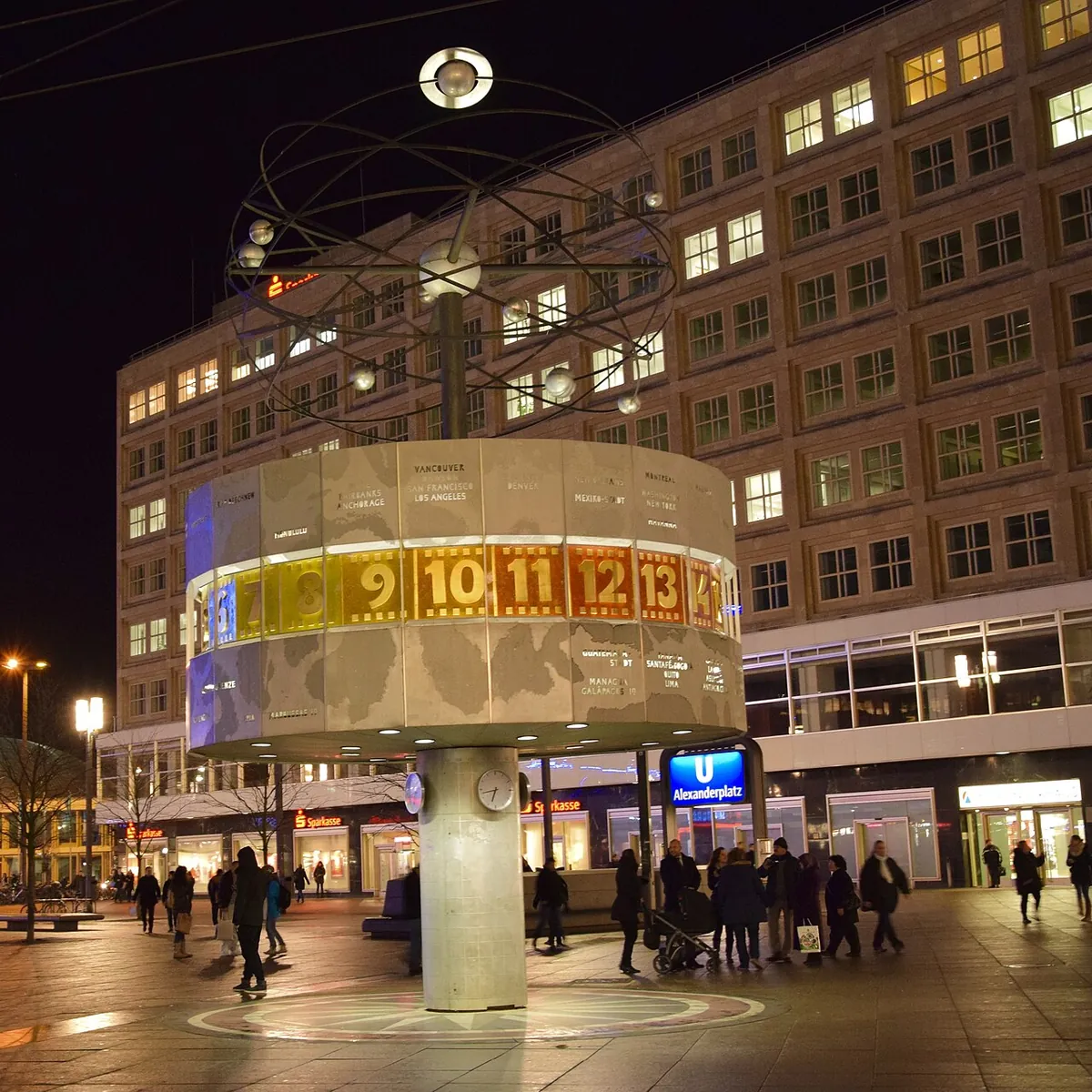
The Earth completes one full spin in roughly 24 hours. A full circle is 360 degrees, which means the planet turns 15 degrees every hour. Because of this, the world was divided into vertical bands (time zones) that are about 15 degrees wide, and each band has its own hour. If you move one zone to the east, the clock goes forward an hour; move west, and it goes back an hour.
However, the borders of these zones are rarely perfectly straight, because each country decides for itself which time it wants to follow. As a result, time zones often zig-zag along national borders. For example, Kyiv is always one hour ahead of Warsaw. When both countries turn their clocks back an hour in autumn, that one-hour difference remains exactly the same.
When every town had its own clock
There was a time when every town lived by its own local sun. In Britain, for instance, clocks in Bristol ran about 10 minutes behind those in London. But when the railways were built, these different local times started to cause chaos with train schedules. In 1847, British railways were advised to adopt a single, unified time—the one kept at Greenwich.

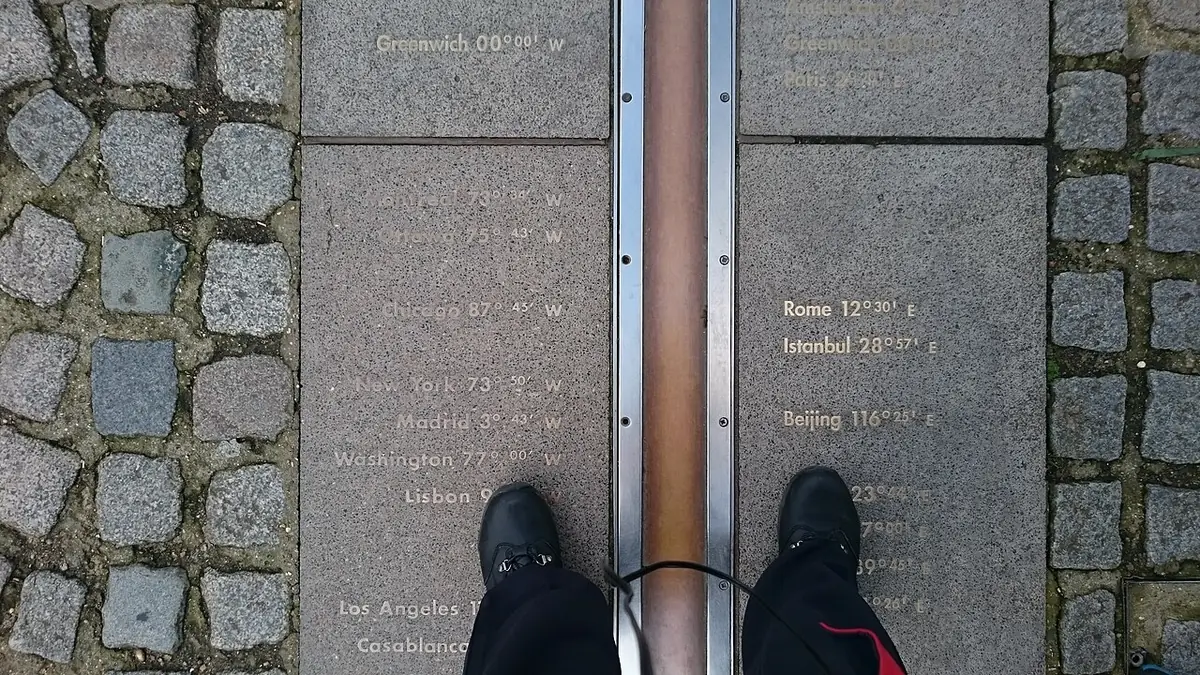
In 1884, 41 delegates from 25 countries gathered in Washington, D.C. They agreed that longitude would be measured starting from a line running through Greenwich, near London. This same line became the starting point for counting time zones. Twenty-two countries voted in favour of Greenwich. The reasoning was purely practical: the vast majority of the world’s ships were already using nautical charts based on that specific line. France abstained from the vote and continued counting from its own meridian in Paris until 1911.
You can actually see this line in person. It runs straight across the courtyard of the Royal Observatory in Greenwich, and visitors love to stand with one foot in the Western Hemisphere and the other in the Eastern Hemisphere.
Countries that do things their own way
China is almost as large as the contiguous United States, yet it operates on only one official time zone. This decision was made in 1949. As a result, in the far west of China, the sun rises incredibly late according to the clock.
On the other hand, France has more time zones than any other country in the world—a total of 12. While mainland France in Europe sits in a single time zone, the remaining 11 are due to its various overseas territories scattered across different oceans.
Right down the middle of the Pacific Ocean runs the International Date Line. If you cross it heading west, the calendar jumps a full day forward. If you fly east across it, you get to live the exact same day twice. The very first place on Earth to welcome the New Year is the island of Kiritimati in the nation of Kiribati.
The lamp and orange experiment
- Take an orange (or any round ball). This will be the Earth.
- Stick two small stickers on it: one to mark where your town is, and one far away on the exact opposite side.
- Turn on a desk lamp in a dark room. The lamp will act as the Sun.
- Slowly spin the orange on its axis, just like a globe.
- Ask your child to call out when their sticker is in the morning, noon, evening, and night.
- Stop spinning when your sticker is brightly lit and the opposite one is deep in shadow. That visual is the perfect answer to why Grandma is already fast asleep.
What time is it in space?
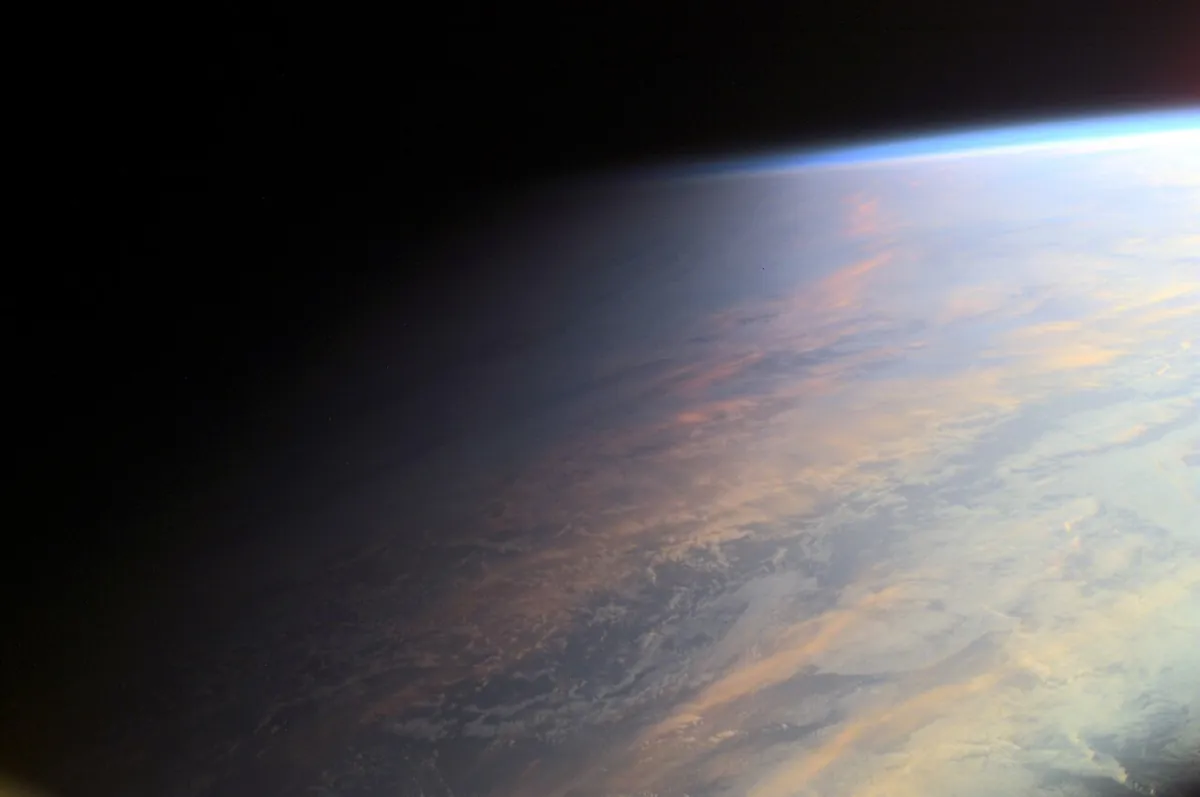

The International Space Station circles the Earth so rapidly that its crew experiences about 16 sunrises and 16 sunsets every single day. If the astronauts tried to set their routines by the sun, they would be completely lost. That is why the clocks on the station are set to Greenwich Mean Time—the exact same standard used to measure time zones down on Earth.
Your child’s very next question will probably be: “So what time is it right now in Japan, Brazil, or Australia?” Spread out a large world map, locate those countries, and count the time zones together.