 Growney
Why did the dinosaurs die out? How to explain it to a child

A child who knows the names of dozens of dinosaurs will sooner or later ask where they all went. The answer reads like a detective story. Scientists spent decades gathering clues, and the most important one is about as thick as a finger.
The answer in one sentence
A clue in a layer of clay
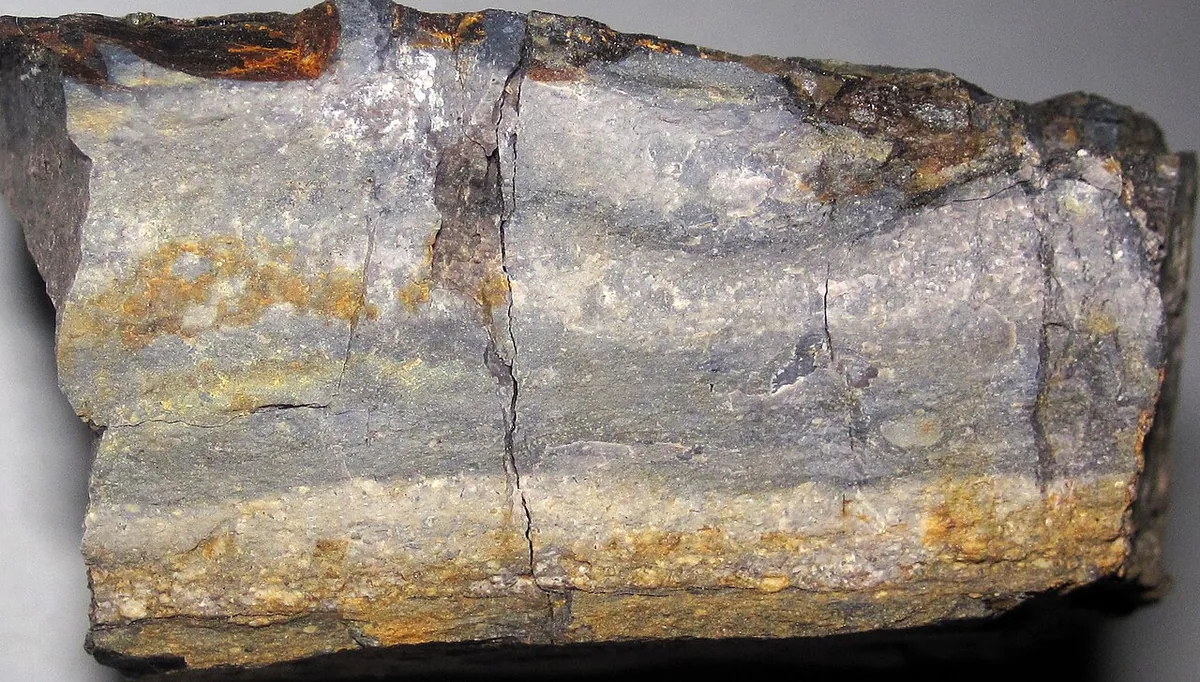
Rocks are laid down in layers, like the pages of a book. The deeper the layer, the older it is. In the 1970s, the geologist Walter Alvarez was studying such layers near the Italian town of Gubbio. Right at the boundary between the time of the dinosaurs and the time after them, he found a thin layer of clay.
With his father, the physicist Luis Alvarez, he measured the metal iridium in that clay. The Earth's crust has very little of it. The Gubbio clay had 25 to 30 times as much as the layers around it. Asteroids, on the other hand, are rich in iridium. In 1980, the Alvarez team wrote in the journal Science that the layer was dust left by a huge object from space.
At first, many scientists didn't believe it. Over the next ten years, more than two thousand scientific papers were published on the idea. Other teams found the same iridium layer in different corners of the world. So whatever happened, it happened to the whole planet at once.
Looking for the crater
If an asteroid had fallen, it should have left a crater. It turned up in the north of Mexico's Yucatán Peninsula, near the village of Chicxulub. Britannica puts it at about 180 kilometres across. Part of it lies under the floor of the Gulf of Mexico, and younger rock covers the rest, so you can't see it with your own eyes.
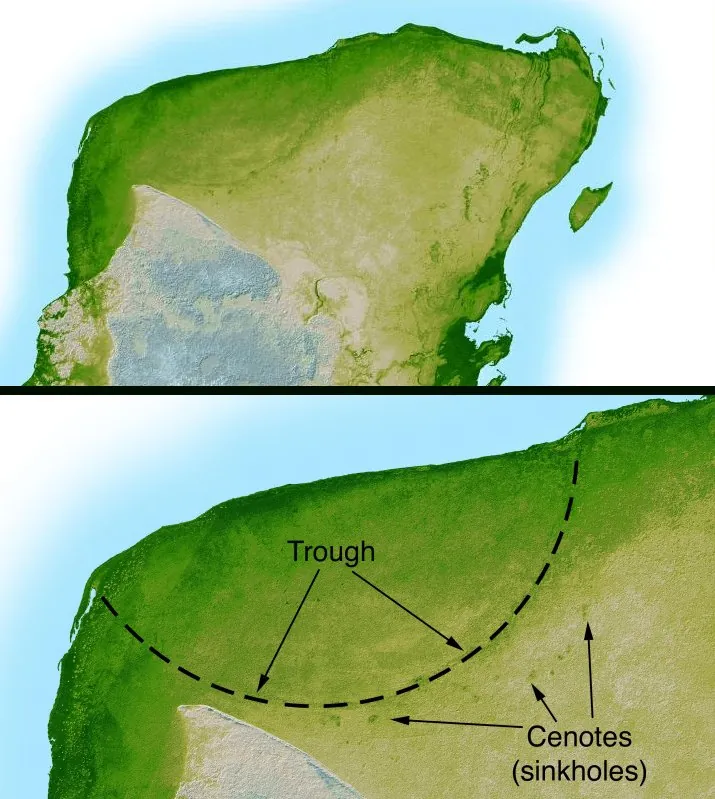

The ground itself gave a hint. On satellite images, NASA researchers noticed an arc of natural wells that people in Yucatán call cenotes. They run along the buried rim of the crater. Radar mapping from the Space Shuttle in 2000 showed a shallow half-circle trough there.
In 2010, a large group of scientists reviewed all the evidence in Science and concluded that this impact caused the extinction. Researchers also discuss the part played by huge volcanic eruptions in India that were going on at the same time.
Why not everything disappeared
The impact threw dust and soot into the air. According to Britannica, they may have blocked the Sun for years. Plants can't grow without light. The plant eaters went hungry first, then the animals that hunted them. Scientists still argue about how long the darkness lasted.
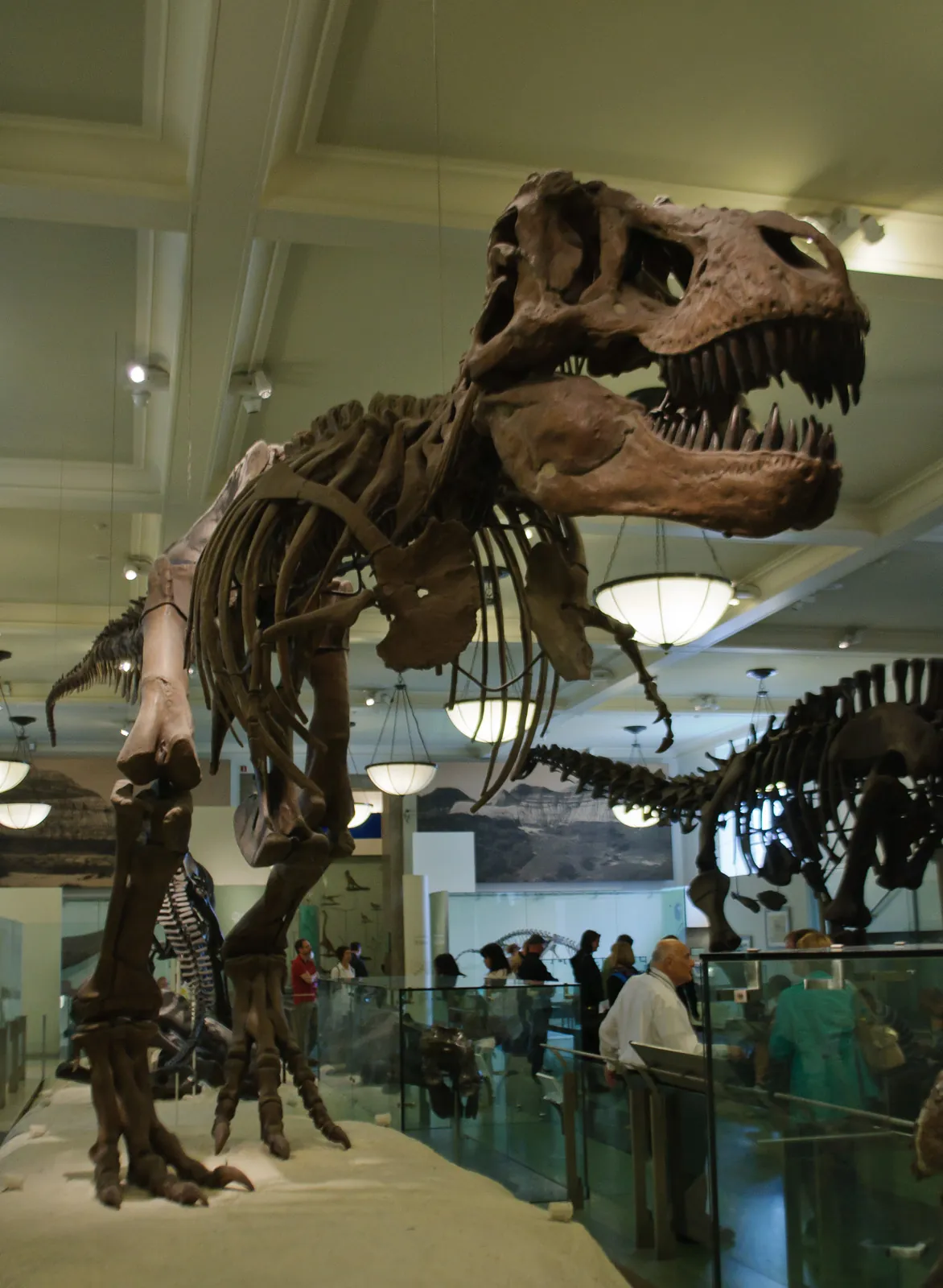
Britannica estimates that about four in five animal species vanished. But it wasn't only small mammals that made it. The American Museum of Natural History in New York points out that birds are dinosaurs, and they survived the disaster. Turtles, lizards, snakes, and frogs came through too.

In 2022, researchers from Uppsala University studied fossil fish from the Tanis site in North Dakota. Fish bones grow in layers, like tree rings. Those layers showed that the fish died in spring. Tiny glass beads from the impact were stuck in their gills.
Layers of earth at home
- The jar. Take a clear jar and pour in several layers of different colours, such as sand, soil, lentils, and coffee grounds.
- The clue. In the middle, add a thin layer of flour or cocoa. That is the strip of asteroid dust.
- Reading. Ask your child to find what went in first. The bottom layers are the oldest, the top ones the youngest.
- Finds. Hide small dinosaur figures in the lower layers and bird and mammal figures above the dust. Dig with a spoon from the top down.
- The talk. Ask why there are dinosaurs below the strip and only birds above it. Let your child tell the story.
One more amazing fact
Where did the asteroid come from? In 2024, scientists compared the metal ruthenium in the clay layer with different meteorites. The Natural History Museum in London reports that the fingerprint matched carbon-rich asteroids that formed beyond Jupiter. So the visitor came from a very distant part of the Solar System.
You can find the same strip of dust in Growney Dino. Your child digs a shaft down from today and, just above the Cretaceous, reaches the layer from 66 million years ago. Only below it do the big dinosaurs begin.