 Growney
How do fossils form? Explaining it to your child

A child looks at a dinosaur skeleton in a museum and asks why it is made of stone. It is a good question, because once these were ordinary bones. To turn into stone, they had to lie underground for thousands or even millions of years.
The answer in one sentence
First, get buried quickly
Usually, nothing is left of a dead animal. Other animals eat it, and the soft parts rot. The American Museum of Natural History explains that only occasionally do the hard parts end up under a layer of sediment and slowly mineralise.
The Natural History Museum in London calls fossilisation a very rare event, because a special set of conditions has to come together. The body has to be covered quickly by mud, sand or silt. Under that layer there is little oxygen, so decay slows down. That is why fossils mostly come from animals that lived near water. Around 99% of finds are sea animals such as shellfish and sharks. In the sea, sand and mud bury a body very quickly.
Even dinosaurs are found mostly where there were once rivers and lakes. Museum scientist David Button says the animals were buried by floods or washed into rivers. We know very little about the ones that lived in jungles or mountains.
How a bone becomes stone
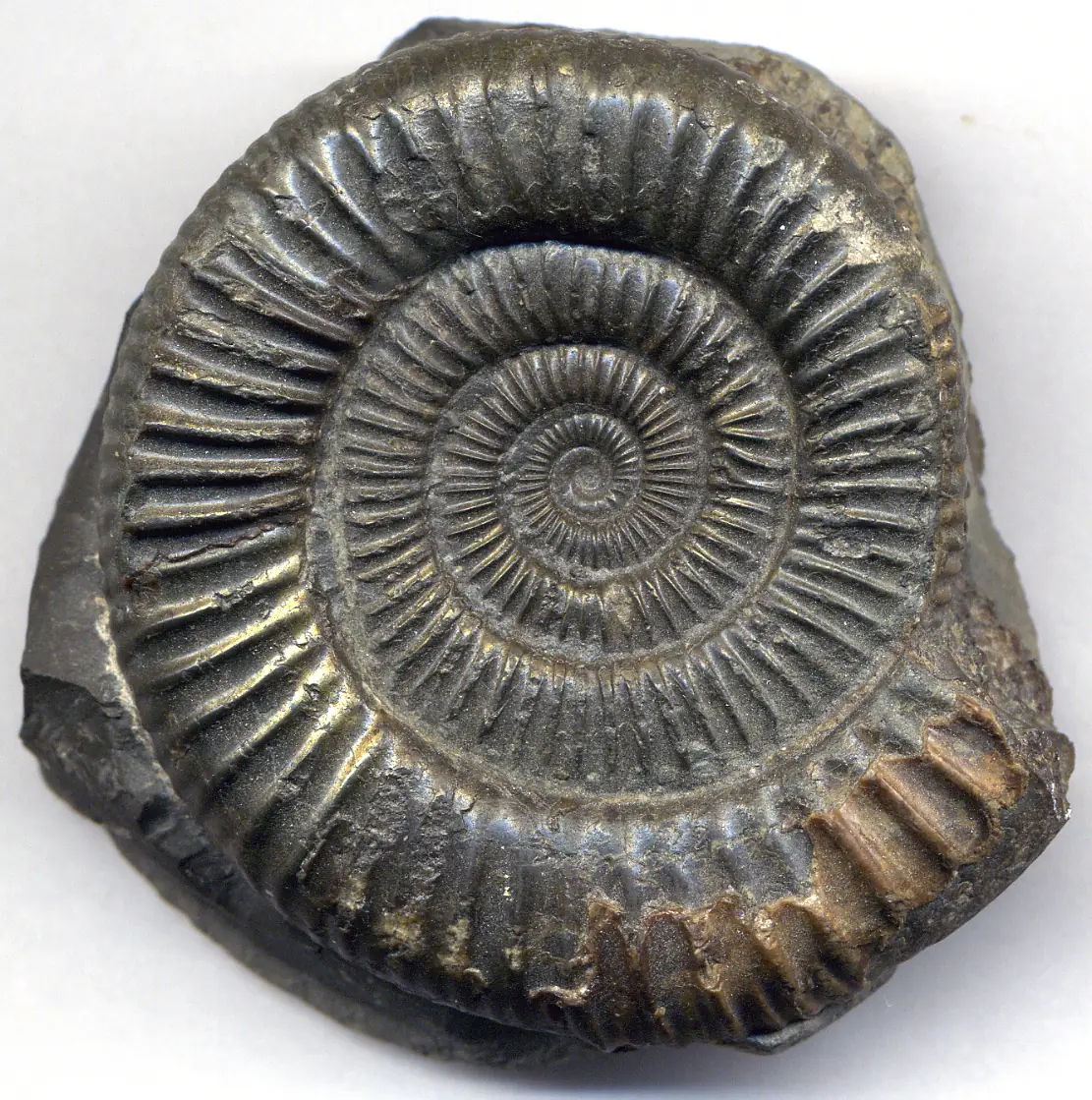

Year after year, new layers settle on top of the buried animal. They press down on the lower ones, which harden into rock. All this time, groundwater seeps into the bones and teeth. It carries dissolved minerals and leaves them in tiny spaces. Bit by bit, the bone is replaced by stone, but it keeps its shape. Scientists call this petrification. It can take thousands or millions of years.
Sometimes water dissolves the bone or shell completely. Then a hollow in its shape is left in the rock, a natural mould. If minerals or sand fill it later, a stone copy forms, which is called a cast.
Small soft-bodied animals, if they are buried quickly, can start to fossilise within months or even days. But bones and shells are preserved far more often.
Not just bones
A fossil can also be a trace. Scientists call these finds trace fossils. They include footprints, skin or feather impressions and even fossilised dung. Dinosaur footprints formed the same way ours do when we walk on wet ground. Then sediment covered the print, and it turned to stone too.
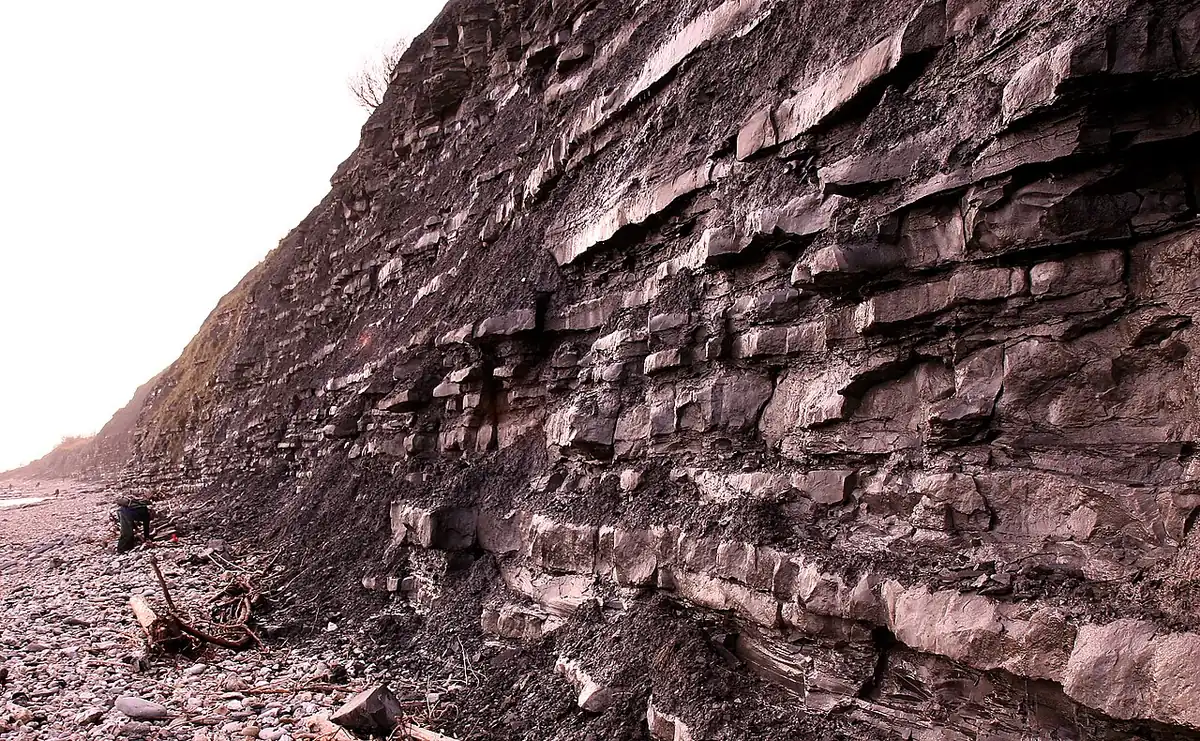
Fossils hide mostly in sedimentary rocks such as sandstone and shale. But you can only find one once it reaches the surface. Wind, rain, ice and rivers slowly wear rocks away. So palaeontologists search riverbanks and cliff faces. They spend hours walking slowly and looking closely, because a fossil is often a slightly different colour from the rock around it.
That is how Mary Anning searched. She was born in 1799 in the English seaside town of Lyme Regis. Her family collected fossils from the cliffs and sold them. When Mary was about twelve, she and her brother found the skeleton of an ichthyosaur, an ancient sea reptile. Her brother came across part of the animal first, and Mary dug out the skeleton. Later, she found more ichthyosaurs and plesiosaurs in the same cliffs, and in 1828 a flying reptile, a pterosaur.
Try it at home
- Press a hand or foot into damp sand or modelling clay. That is a trace fossil, just a very young one.
- Press a shell or a toy dinosaur into modelling clay and lift it out carefully. You have made a natural mould. Fill it with plaster of Paris, let it set and peel away the clay. Now you have a cast.
- Try the Natural History Museum's own experiment. Cut a bone shape out of a sponge, soak it in salty water, then let it dry. The salt stays inside the sponge, like minerals inside a real bone.
- On a walk by a river or the seaside, look for pebbles with an unusual colour or pattern. Look at them together.
One more amazing fact
One dinosaur could leave countless footprints, but it only had one skeleton. From the distance between the left and right footprints, scientists work out how fast a dinosaur was moving. Every one of those prints was once an ordinary step on a muddy shore.