 Growney
Why are birds called dinosaurs? How to explain it to a child
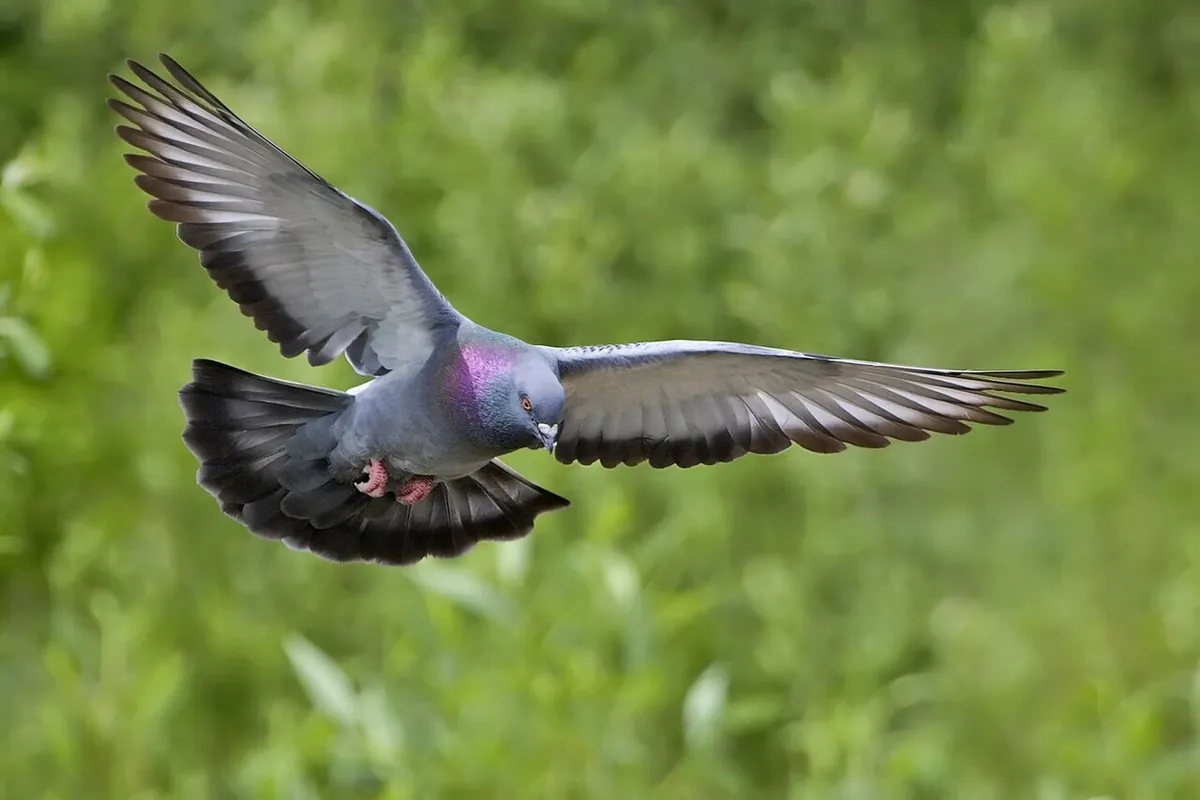

A child stares at a pigeon in the square for a long time and then says it looks like a little dinosaur. Scientists would agree. To them a pigeon, a blue tit and an ostrich really are dinosaurs that have lived on to the present day.
The answer in one sentence
One big family
The dinosaurs that walked on two legs and mostly hunted are called theropods. T. rex and Velociraptor were among them. Palaeontologist Paul Barrett of the Natural History Museum in London explains that decades of discoveries have convinced researchers of a direct link between modern birds and theropods.
The University of California Museum of Paleontology counts more than a hundred body features that birds share with dinosaurs. The American Museum of Natural History in New York names a few. There are hollow bones and the wishbone, which is two collarbones grown together. Every theropod has a wishbone, birds included.
In 2008 scientists at Harvard compared collagen, a protein, from a 68 million year old T. rex bone with proteins from 21 living animals. The closest matches to T. rex were the chicken and the ostrich. The alligator came further behind.
The first bird had teeth
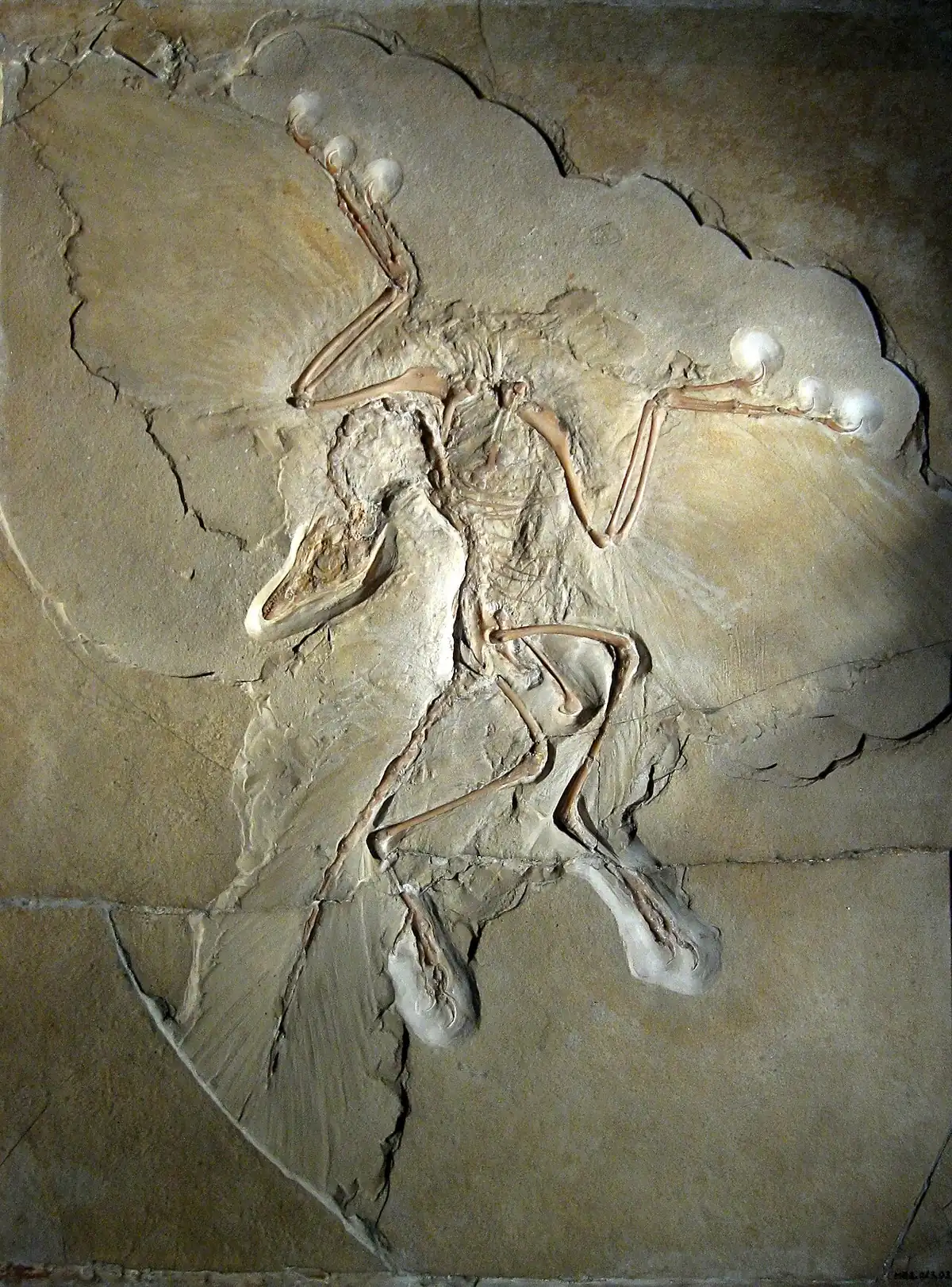

In 1861 a fossil of an animal with feathers and wings turned up in Germany. It was named Archaeopteryx. The Natural History Museum says it lived between 149 and 145 million years ago, and the find took scientists by surprise. Nobody knew of birds that old at the time.
Archaeopteryx had feathers, but it also had teeth, a long bony tail and three clawed fingers on each wing. Birds today have none of these. In 1868 the English scientist Thomas Huxley compared it with a small meat-eating dinosaur called Compsognathus and saw how alike they were. He concluded that birds came from dinosaurs.
Feathers came before flying
In 1996 scientists in China described Sinosauropteryx. The Australian Museum says it was the first dinosaur found that was not a bird but still showed signs of feathers. Its feathers were simple, like thin threads.
After that more and more feathered dinosaurs turned up, and most of them could not fly. The American Museum of Natural History explains that this is why scientists dropped the idea that feathers appeared for flight. They could keep an animal warm, protect it and make it look good.
In 2007 researchers from the American Museum of Natural History and the Field Museum in Chicago examined a forearm bone of Velociraptor. It had a row of evenly spaced bumps. In birds today the big wing feathers attach to bumps just like these. So Velociraptor had feathers too.
A parent on the nest
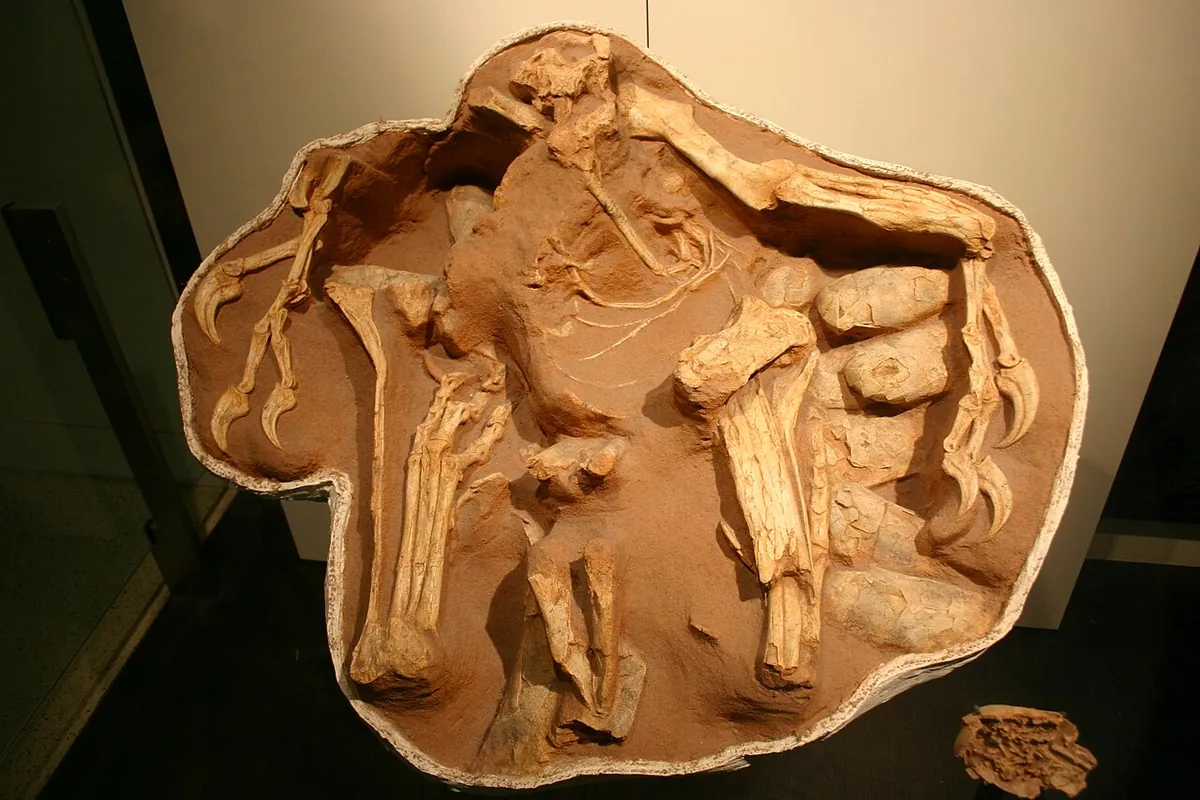

Bird behaviour can be found in stone as well. In 1993 an expedition from the American Museum of Natural History dug up a Citipati in the Gobi Desert in Mongolia. It was a beaked dinosaur that died right on its own nest.
It sits on the eggs with its front limbs spread over the edges of the nest. The museum says many birds today cover their eggs with their wings in just the same way. So dinosaurs already sat on their eggs long before the first pigeons.
Why only birds survived
About 66 million years ago a huge asteroid hit the Earth. Nearly all dinosaurs died out, but one branch survived. Every bird alive today comes from it. The American Museum of Natural History says that in this sense the age of dinosaurs never really ended.
The Natural History Museum gives a few reasons why birds pulled through. They were small, they could eat many different foods and they could fly. Most likely it was all of these together.
Try it at home
- Find the wishbone. Next time you roast a chicken, save the small V-shaped bone that sits between the breast and the wings. Show your child that T. rex had the very same bone.
- Look at the feet. On a walk, watch the feet of a pigeon or a sparrow. Count the toes and the claws. At home, find a picture of a T. rex foot and compare.
- Play "who is the dinosaur". Take turns naming animals while your child says whether each one is a dinosaur. Chicken, crocodile, ostrich, lizard, owl. Only the birds are dinosaurs.
- Draw Archaeopteryx together. Give it feathers, teeth, claws on its wings and a long tail. Then draw a magpie next to it and see what has gone.
One more amazing fact
In the 1920s Roy Chapman Andrews and his expedition found an adult beaked dinosaur on a nest of eggs in the Gobi Desert. Scientists decided the eggs belonged to someone else and the dinosaur had come to steal them. So they named it Oviraptor, which means "egg thief". In 1993 Mark Norell found the very same kind of egg in Mongolia, with the curled-up embryo of an Oviraptor relative inside. Stretched out, it would have been about 20 centimetres long. It turns out Oviraptor was not stealing eggs at all. It was guarding its own nest.