 Growney
How to see the ISS in the night sky with your child
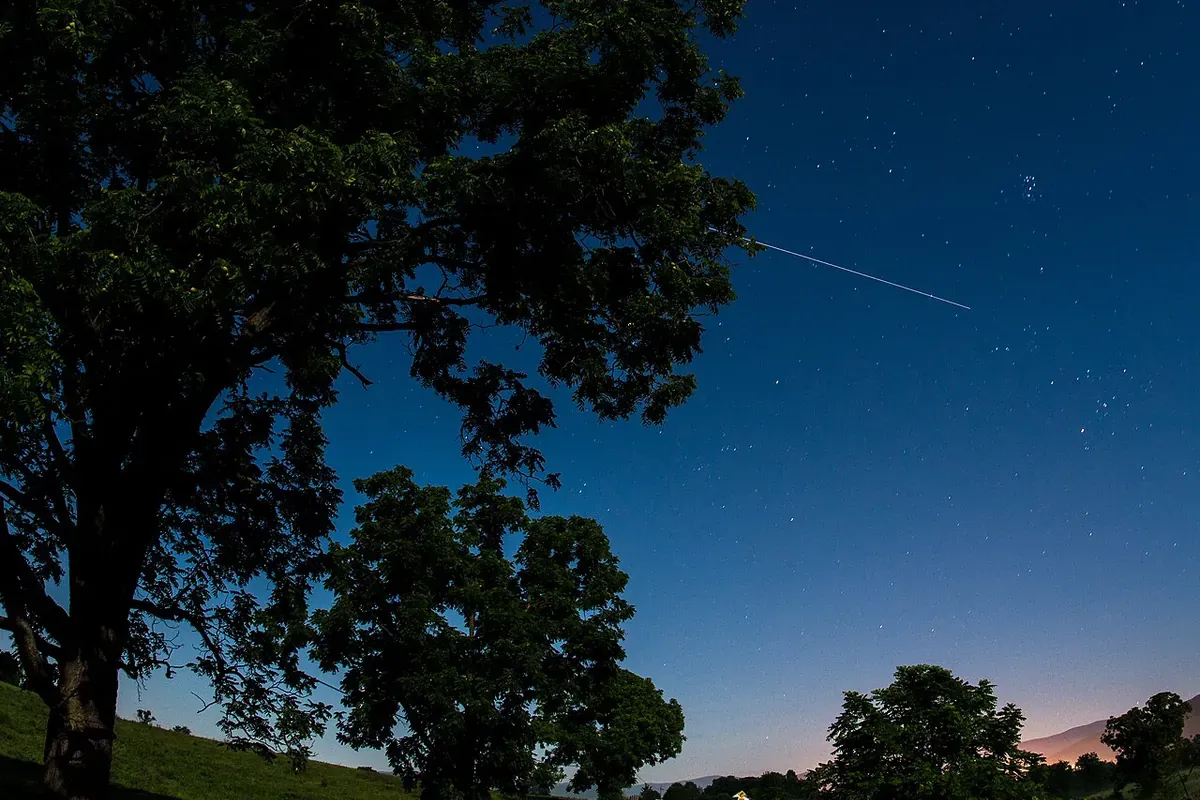

A home where people live passes over our heads regularly. You can see it with your own eyes from a balcony or garden, and you do not need a telescope. You only need to know when to go outside and which way to look.
The answer in one sentence
What we are actually seeing
The station does not shine by itself. Its huge solar panels reflect sunlight like a mirror. That is why you can only see it at twilight. We are already standing in the dark, while high above us the Sun still lights up the station. NASA says every sighting happens within a few hours before or after sunrise or sunset.
According to NASA, the station is the third brightest object in the sky after the Sun and the Moon. It circles about 400 kilometres above the Earth at around 28,000 kilometres an hour. One lap of the planet takes about 90 minutes, so it goes round the Earth 16 times a day. The astronauts on board see 16 sunrises and 16 sunsets every day.
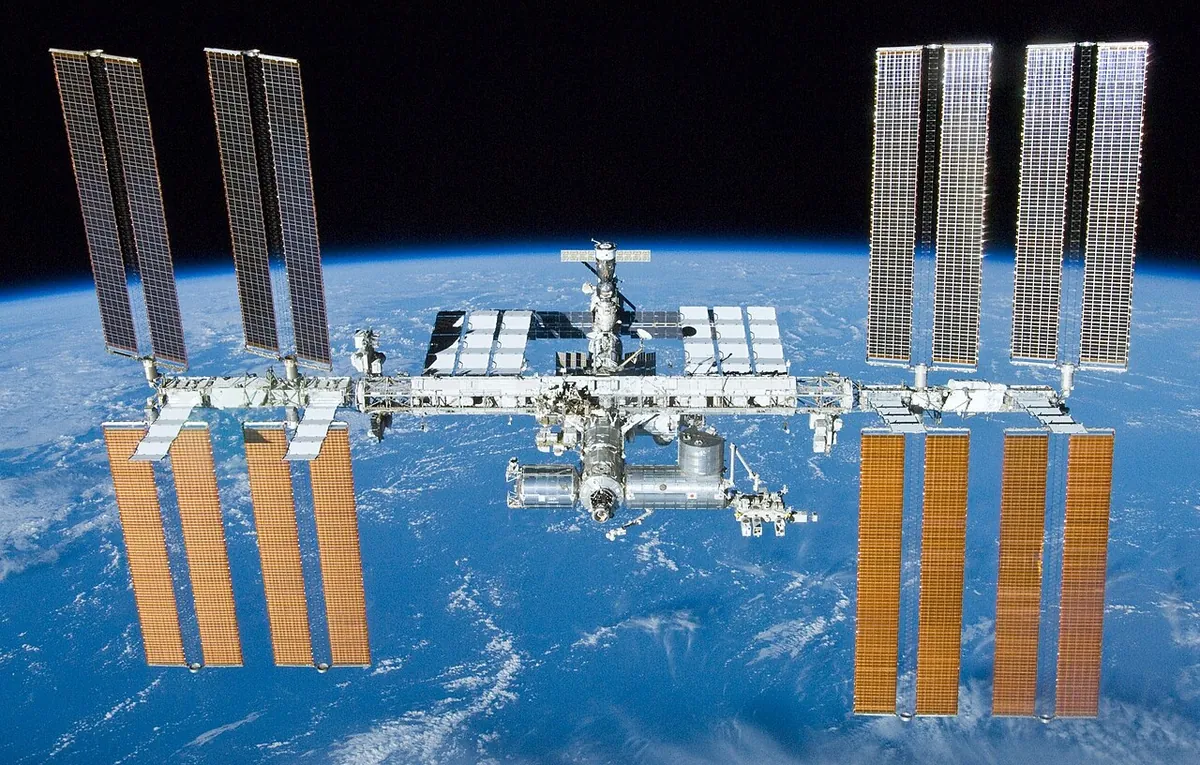

The station is big, too. It measures 109 metres from end to end, which NASA says is almost the length of an American football field. People have lived there without a break since 2 November 2000, which is more than 25 years.
How to tell the station from a plane
Children point at every light in the sky. Here are three clues NASA gives.
- The station does not blink. A plane has flashing lights, while the station shines steadily like a star.
- It does not change direction. It moves across the sky in a smooth arc and never turns.
- It is much faster. A plane flies at about 1,000 kilometres an hour, and the station almost 30 times faster.
There is one more clue at the end of a pass. The station often vanishes in the middle of the sky before it reaches the horizon. NASA explains that it moves into the Earth's shadow, so the Sun no longer lights it. For a child, this is the best moment, because the star seems to switch off right in front of them.
How to find out when it will fly over
NASA has a free website and a phone app called Spot the Station. They show the passes over your town and can send you a reminder. Each pass comes with a few details.
- The time the station appears and how many minutes it stays visible.
- Where it appears and where it disappears, by compass point (W for west, N for north, E for east, S for south).
- Its highest point above the horizon in degrees. Zero is the horizon itself and 90 is straight overhead.
The best pass lasts several minutes and climbs high. ESA says that from a dark spot with no clouds, you can sometimes see the station up to four times in one night.
Going on a station hunt
- Find a pass for your town on the Spot the Station website or app and write down the time.
- Go outside 5 minutes early. Pick a spot with a clear view of the right part of the sky, away from tall buildings and street lights.
- Find the compass direction the station will come from. The compass on a phone helps.
- Show your child how to measure height with a hand. NASA suggests a simple trick. A fist held at arm's length and resting on the horizon covers about 10 degrees of sky. A pass at 40 degrees is roughly four fists above the horizon.
- When a bright star appears and moves steadily, follow it with a finger. Count together how many seconds you can see it.
- Wave to the station. Someone up there is working, eating, or sleeping right now.
Space is closer than it seems
In the summer of 2025, Sławosz Uznański-Wiśniewski spent 18 days working on the station as part of Ignis, Poland's first mission to the ISS. So the bright dot you can spot from your garden was home to a Polish astronaut for almost three weeks.
The station will not last forever. NASA plans to retire it in 2030 and bring it down over a remote part of the ocean. That leaves a few more years to wave at people in space from your own garden. And after the first pass, the next question will almost certainly be how the astronauts live, sleep, and eat up there.