 Growney
What is a black hole? How to explain it to a child simply

The words “black hole” sound frightening, and children often ask about one exactly when they feel a little scared. You can explain it without any maths. And an experiment with a bedsheet and a few marbles shows the main idea better than any picture.
The answer in one sentence
Where a black hole comes from
Start with what your child already knows. Everything pulls on everything else. The Earth pulls a ball, so the ball falls. The Sun pulls the Earth, so the Earth goes round it. The more stuff there is in one place, and the more tightly it is squeezed, the harder it pulls.
NASA explains that a black hole forms when a huge amount of matter is squeezed into a very small space. This can happen when a big star dies. Its middle falls in on itself, and gravity becomes so strong that it will not even let light go. Without light, we cannot see anything, so the hole looks black.
Sizes help here. According to NASA, an ordinary stellar black hole can have up to 20 times the mass of the Sun and still fit inside a ball about 10 miles (16 kilometres) across.
It is not really a hole
The name is a bit misleading because the inside is not empty at all. There is a huge amount of matter packed into a tiny space. A black hole also does not roam around space sucking things up like a vacuum cleaner. NASA says plainly that black holes do not wander about eating stars, moons, and planets.
This is the fact that calms children down the most. The Sun will never become a black hole because it is too small for that. But if a black hole with the same mass suddenly took its place, NASA says the Earth would carry on in the same orbit as now. It would just get dark and cold. The danger only starts when you get very close. There, gravity stretches anything that comes near into a long, thin noodle. Scientists really do call this spaghettification.
How to see something that does not shine
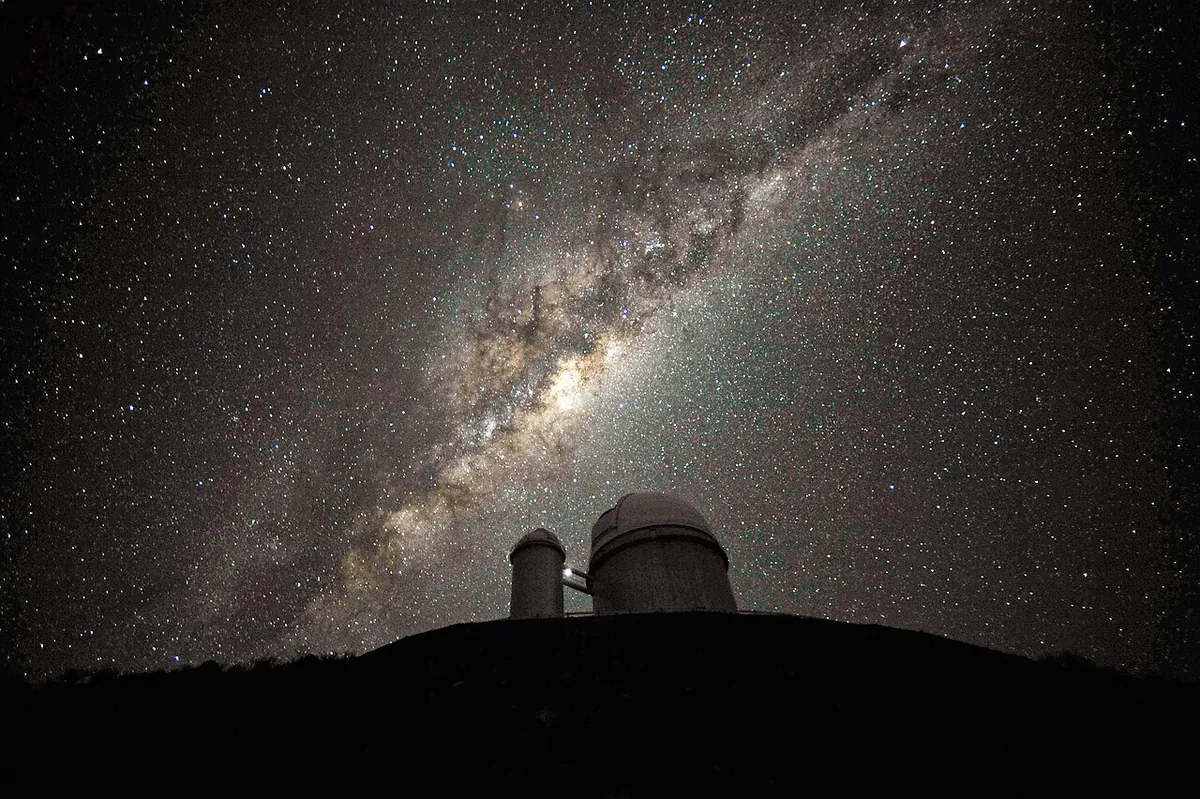
You cannot see the black hole itself. You can see what happens around it. Gas falling towards it heats up to millions of degrees and gives off X‑rays. And nearby stars whizz around something invisible.
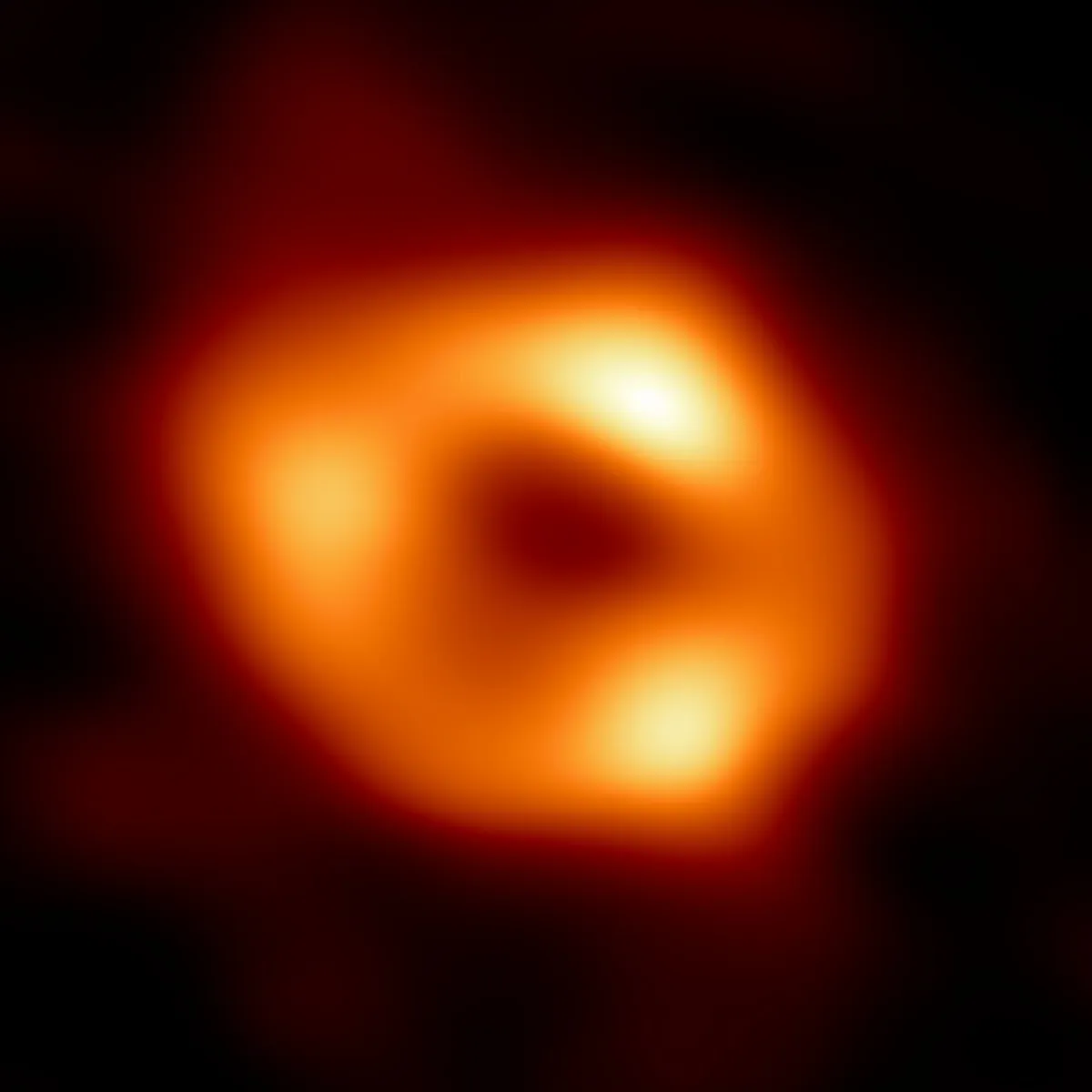
That is how the black hole at the centre of our galaxy was found. It is called Sagittarius A*. Two teams of astronomers, led by Andrea Ghez and Reinhard Genzel, watched the stars near the middle of the Milky Way from the early 1990s. The stars raced around as if they were circling a huge invisible mass. In 2020, the two scientists shared the Nobel Prize in Physics for this discovery. This black hole has about the mass of 4 million Suns and lies 27,000 light years away.
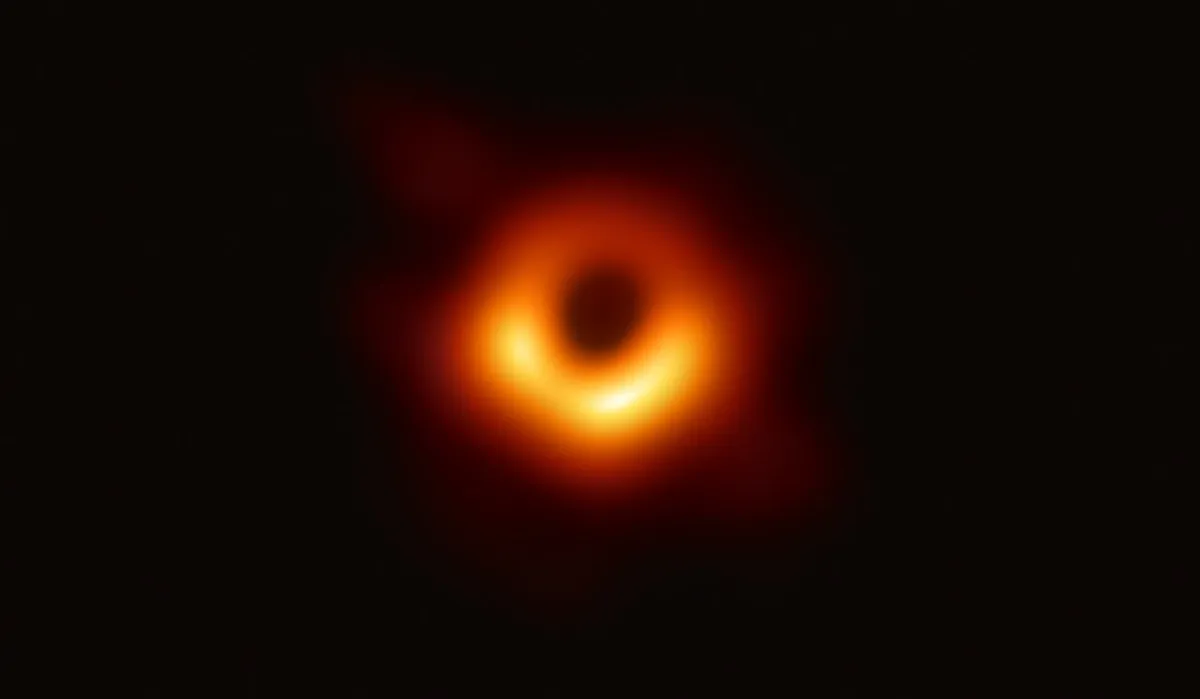
On 10 April 2019, scientists showed the world the first image of a black hole. Eight radio telescopes in different parts of the world worked together like one telescope the size of a planet. They photographed the black hole in the galaxy M87, which is 6.5 billion times heavier than the Sun. The picture shows a bright ring of hot gas and a dark patch in the middle, which is the black hole's shadow. Then, on 12 May 2022, came an image of our own, Sagittarius A*.
The bedsheet experiment

NASA suggests an experiment like this in its education materials. The sheet stands for space, and a heavy ball stands for a star or a black hole.
- Take an old sheet or a piece of stretchy fabric. Two people, adults or older children, hold it tight by the corners above the floor.
- Put a light ball in the middle. The fabric will dip only a little.
- Now put a heavy ball or an orange there instead. A deep dip appears.
- Roll a marble or a bead in from the side. It starts circling the dip like a planet around a star.
- Roll the marble slowly, and it falls into the dip. Roll it fast, and it goes past or makes a few laps.
- Press down on the heavy ball with your hand so the dip gets even deeper. That is what a black hole would look like. The marble can no longer roll out of this dip.
The fabric is flat and real space has three dimensions, so it is only a model. But for a first chat about gravity, there is none better.
The nearest black hole
In 2022, astronomers found the nearest known black hole. It is called Gaia BH1. It has about 10 times the mass of the Sun and lies 1,600 light years from Earth. A star much like our Sun circles it, at roughly the same distance as the Earth is from the Sun. The black hole was spotted by the way this star wobbles. So the next time your child asks what is up in the night sky, you can say that some things hiding among the stars cannot be seen at all. From there, the conversation turns easily to our own Sun, which shines on us every day.