 Growney
How big is the Sun? How to explain it to a child

In the sky, the Sun looks no bigger than a coin held at arm's length. So children are amazed to hear that it is enormous. How can that be, if it looks so small? The answer is distance, and you can show it in the garden or the park in ten minutes.
The one-sentence answer
The Sun is a star, too
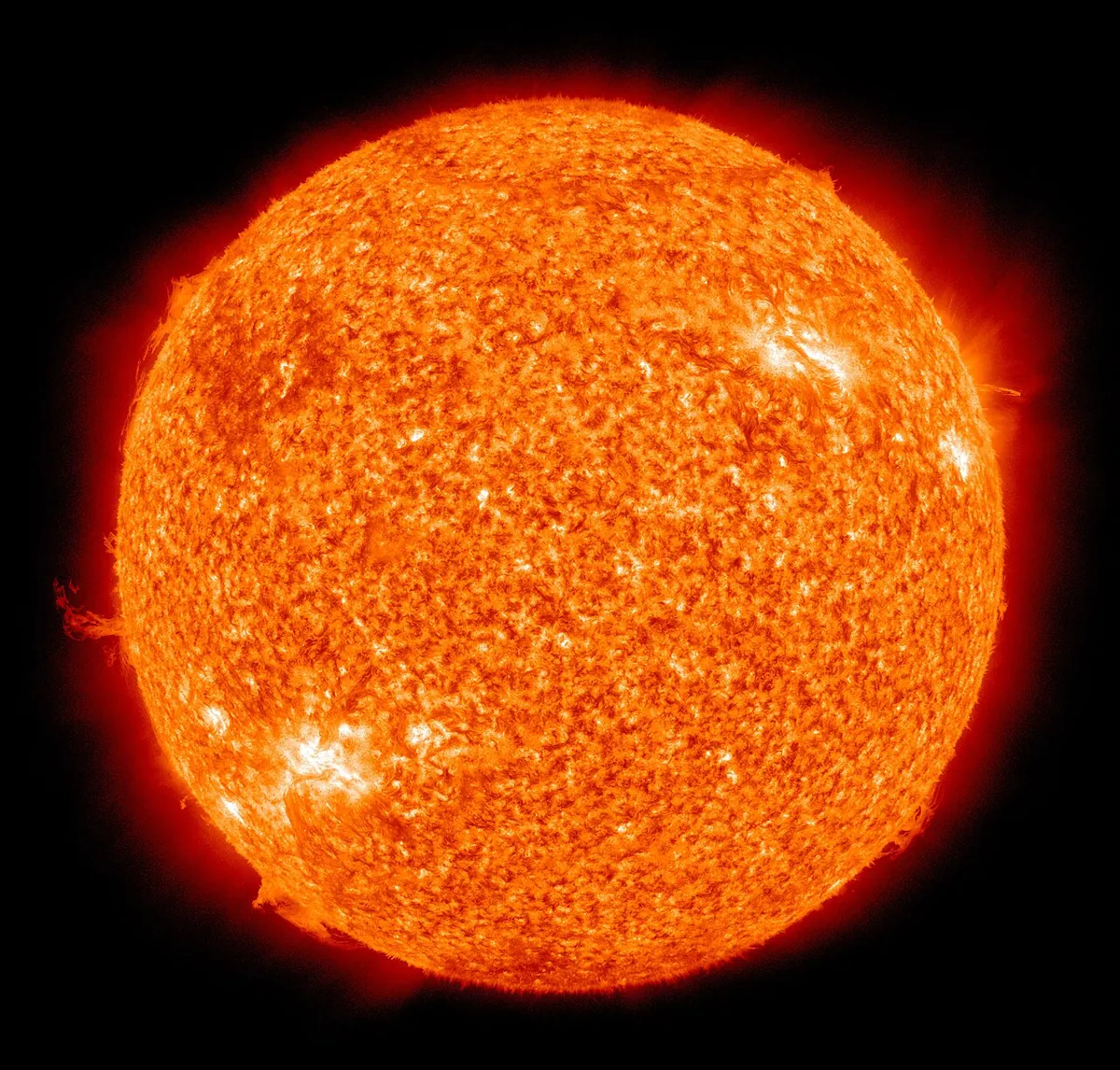
Start with the most important bit. The Sun is a star, just like the ones that shine at night. It is simply the one closest to us. The other stars are so far away that they look like tiny sparks, while the Sun is close enough to warm us and give us daytime.
A hundred and nine Earths in a row
The Sun is almost 1.4 million kilometres across. According to NASA, if you lined up Earths side by side, 109 of them would stretch from one edge of the Sun to the other.
If the Sun were a hollow ball, about 1.3 million Earths would fit inside. It weighs as much as more than 330,000 Earths. Numbers like these are hard to picture even for adults, so it helps to see them once with your own eyes. All the planets, moons and asteroids put together do not weigh even a hundredth of the Sun. The Sun holds 99.8 per cent of all the matter in the Solar System.

Why it looks small
The further away something is, the smaller it looks. A plane in the sky looks no bigger than an insect, yet hundreds of people sit inside it. The Sun is about 150 million kilometres from Earth. Even light, the fastest thing in the universe, takes 8 minutes and 20 seconds to get here.
So when your child looks at the morning Sun, they see light that set off a little earlier. While they were brushing their teeth, it was already on its way.
The Sun and the Moon look the same size
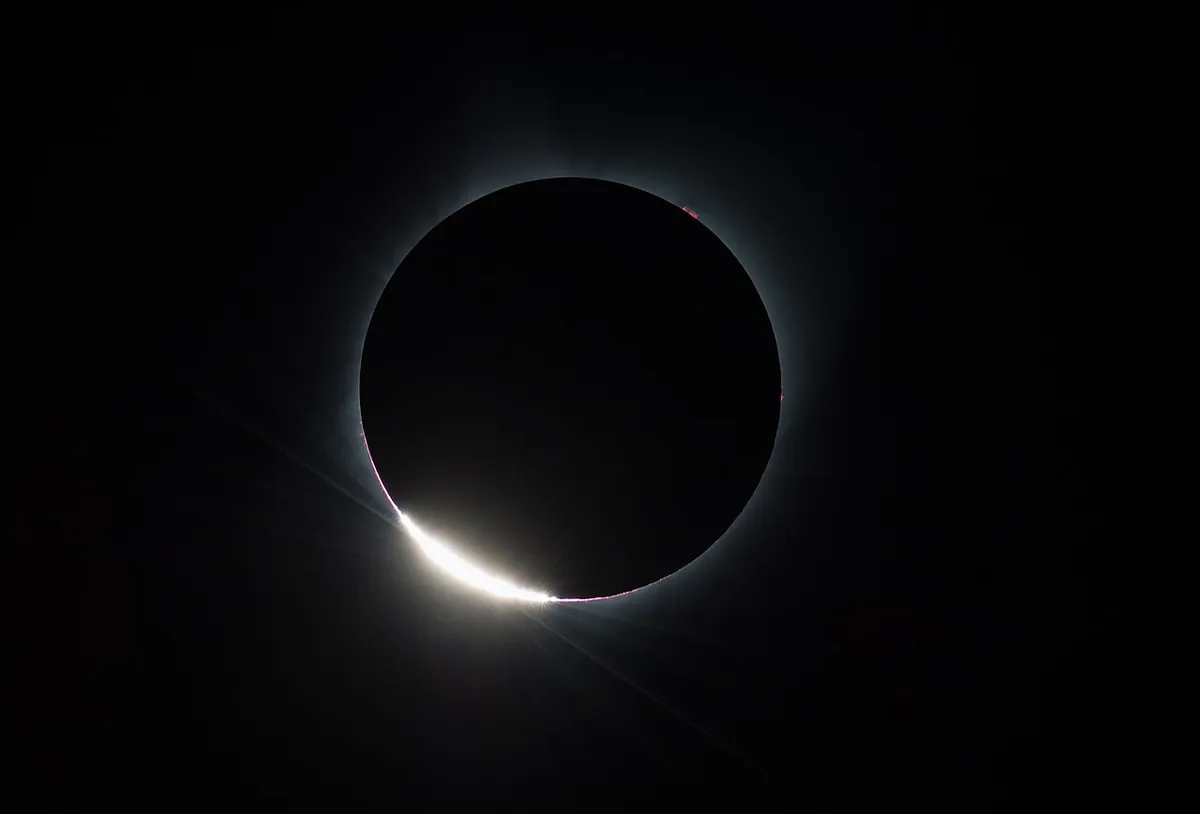
In the sky, the Sun and the Moon look almost the same size. In fact, the Sun is about 400 times wider than the Moon. But it is also about 400 times further away. The two numbers match almost exactly, which is why the Moon can cover the Sun completely. That is a total solar eclipse, and a bright corona glows around the dark disc.
Never look straight at the Sun, not even for a few seconds, because it damages the eyes. Special eclipse glasses exist for that, and the easiest way is to look at the Sun in photos.
A model of the Sun and Earth outdoors
Start at home with paper. Draw a circle one centimetre wide. That is Earth. Now take a roll of lining paper, or a few sheets taped together, and measure 109 centimetres next to it. That is how wide the Sun would be at this scale. Next to that long strip of Sun, the tiny Earth hides under a fingertip.
Then go outside. NASA scientist David Hathaway came up with a model that is easy to build with a child. In it, the Sun is a basketball.
- Put the basketball at one end of a garden, park or playing field. That is the Sun.
- Take a pin with a small round head. The head is about a quarter of a centimetre wide. That is Earth.
- Hold the pin next to the ball and compare. Ask your child to guess how many pinheads would fit inside the ball.
- Now walk about 28 metres away from the ball. That is roughly the distance between the Sun and Earth in this model.
- Push the pin into the ground and look back at the ball. It will look much smaller than it did up close.
Some stars are even bigger
To us, the Sun is huge, but among stars, it is average. NASA calls it an average-sized star. Betelgeuse in the constellation Orion is about 700 times bigger than the Sun. If it took the Sun's place, it would reach beyond the orbit of Jupiter.
So next time your child sees the Sun setting, they will know it is a giant that is simply very far away. And the next question will probably be "So which star is the biggest?"