 Growney
What do Mars rovers do? How to explain it to a child
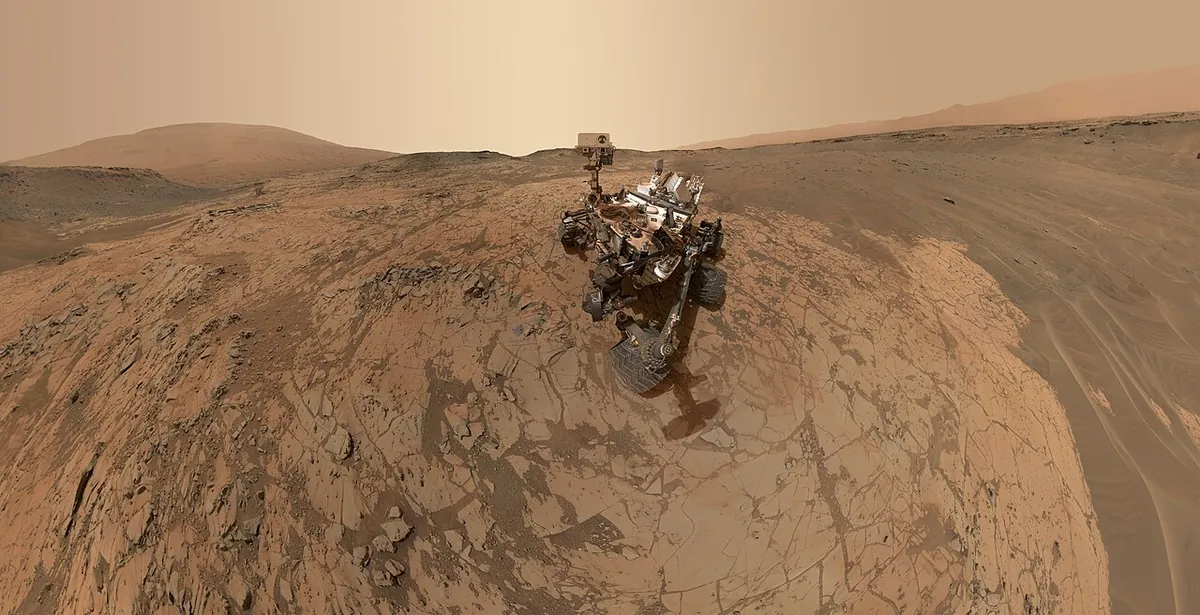

A child looks at a photo of Mars and asks who took it, if nobody lives there. Rovers took it. They are robots on wheels that have been driving around the Red Planet for us for almost thirty years. Talking about them turns easily into a game, and a room, a few cushions and a sheet of paper are enough.
The answer in one sentence
Why Mars is red
Start with the colour, because children notice it first. ESA explains that the rocks on Mars contain a lot of iron. Long ago, it met water and oxygen and rusted, like an old nail left in the garden. Over billions of years, the wind spread that rust as dust across the whole planet. So Mars is red because it is rusty.
Five NASA rovers, from small to big
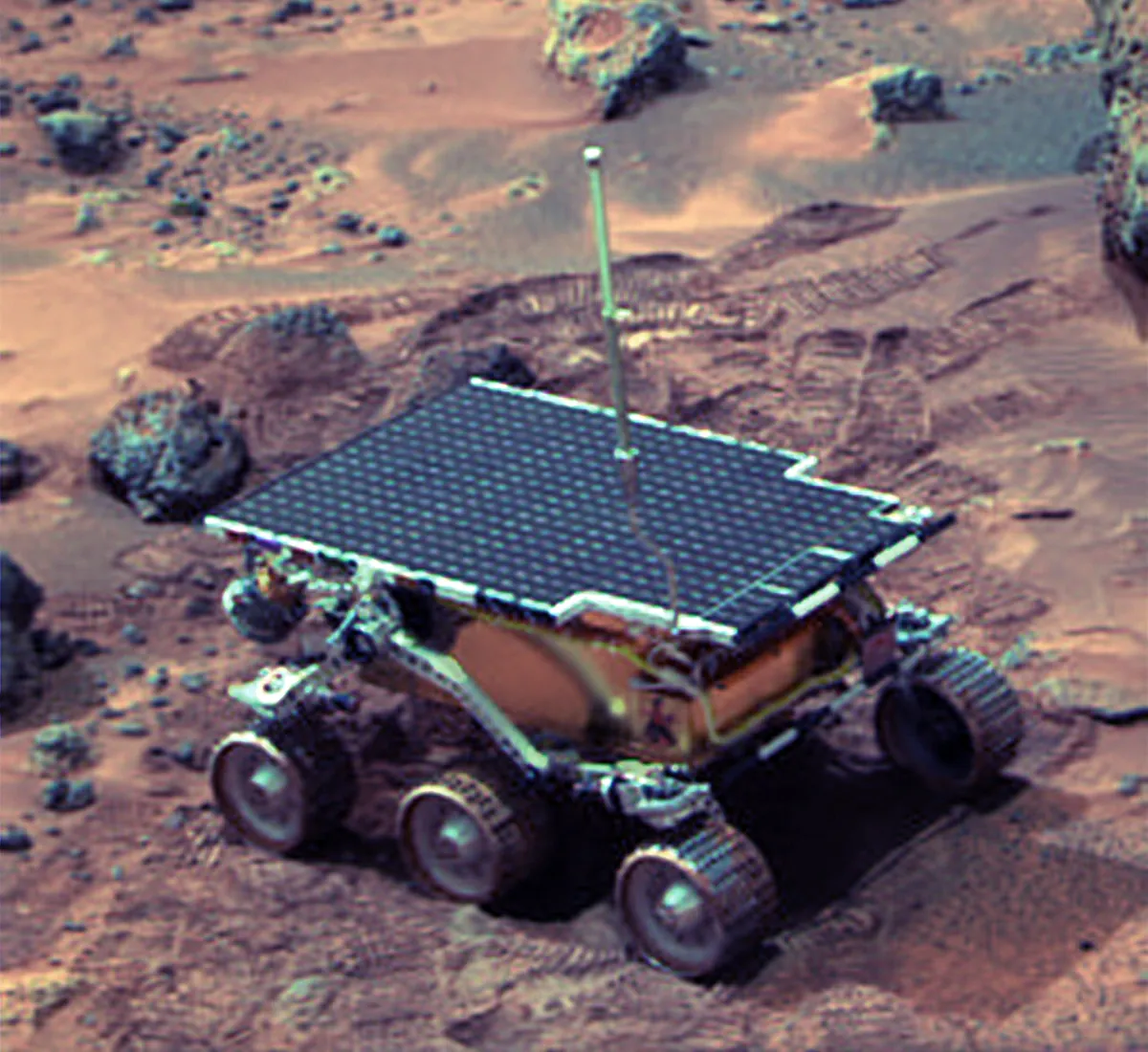

NASA's first rover, Sojourner, rolled down a ramp onto Mars in July 1997. It weighed just 10.6 kilograms. Scientists expected it to last a week, but it kept going for 83 days and sent 550 photos back to Earth.
In 2004, the twins Spirit and Opportunity arrived. Each was about the size of a golf cart and ran on solar panels. Opportunity was meant to work for 90 days, but kept working for more than 15 years. It found proof that water once flowed on Mars.
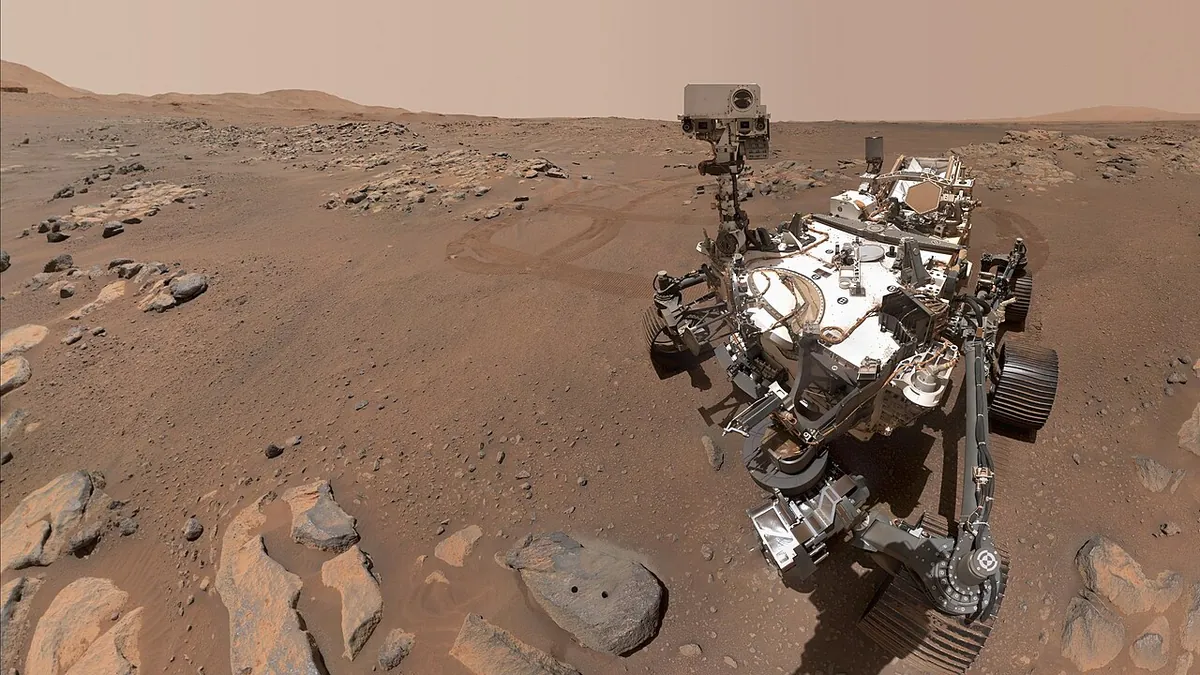
In 2012, Curiosity landed in Gale Crater. It is the size of a small car. It has no solar panels because a nuclear generator makes its electricity, so dust is no problem. Then, in 2021, came Perseverance, NASA's fifth rover. It is about 3 metres long and weighs 1,025 kilograms on Earth.
What they do all day
Every rover has cameras to take pictures and find a safe path. It has an arm with tools to look at a rock up close or drill into it. Curiosity also has a laser. JPL says it can zap a tiny spot on a rock up to 7 metres away. The rock flashes, and an instrument reads the colours of that flash to work out what the rock is made of.
Perseverance started out in Jezero Crater, where there was once a lake. It drills thin cores out of rocks and seals them in tubes, so they can one day be brought to Earth. In 2025, NASA announced that one of these rocks holds possible signs of ancient life. To say for sure, the sample has to be studied in a laboratory on Earth.
Why you cannot drive a rover with a joystick
A radio signal takes between 4 and 24 minutes to travel from Earth to Mars, depending on where the planets are in their orbits. NASA explains that this means a driver on Earth cannot see what is happening to the rover right now. If they turned the wheel next to a cliff, the rover would only find out minutes later, when it was too late.
So commands are planned ahead and sent as a package. Perseverance can also drive itself. It builds a map of the ground in its memory and steers around rocks on its own. It has covered more than 90 percent of its route that way. Even the Ingenuity helicopter that travelled with it flew by itself. Its first flight on 19 April 2021 was the first powered, controlled flight on another planet. It was planned for five flights, but made 72.
A mission control game at home

One player is the rover and the other is mission control. You need a room, a few cushions as rocks, and some "treasure", such as a toy under a napkin.
- The rover closes their eyes or turns their back to the room. They only know what they are told.
- Mission control writes commands on a sheet of paper, such as "three steps forward", "turn right", "two steps forward".
- The whole sheet is passed over at once. But first, everyone counts slowly to twenty together. That is the signal delay.
- The rover follows the commands one by one. Stepping on a cushion means getting "stuck in sand", and mission control makes a new plan.
- When the rover finds the treasure, they describe it by touch, the way a scientist describes a rock.
Then swap roles. Children soon see why "step, step again, stop" works better than "go over there".
A record set a few weeks ago
For years, the record on another world belonged to Opportunity, which drove 45.16 kilometres. But on 11 October 2026, Perseverance passed 45.22 kilometres and took the record. No vehicle has driven farther anywhere beyond Earth. And it is still driving, now beyond the rim of Jezero Crater. So the next time your child spots reddish Mars in the night sky, they will know our robots are at work there right now. Next, they will probably ask whether people will go there too.