Growney
What your child does
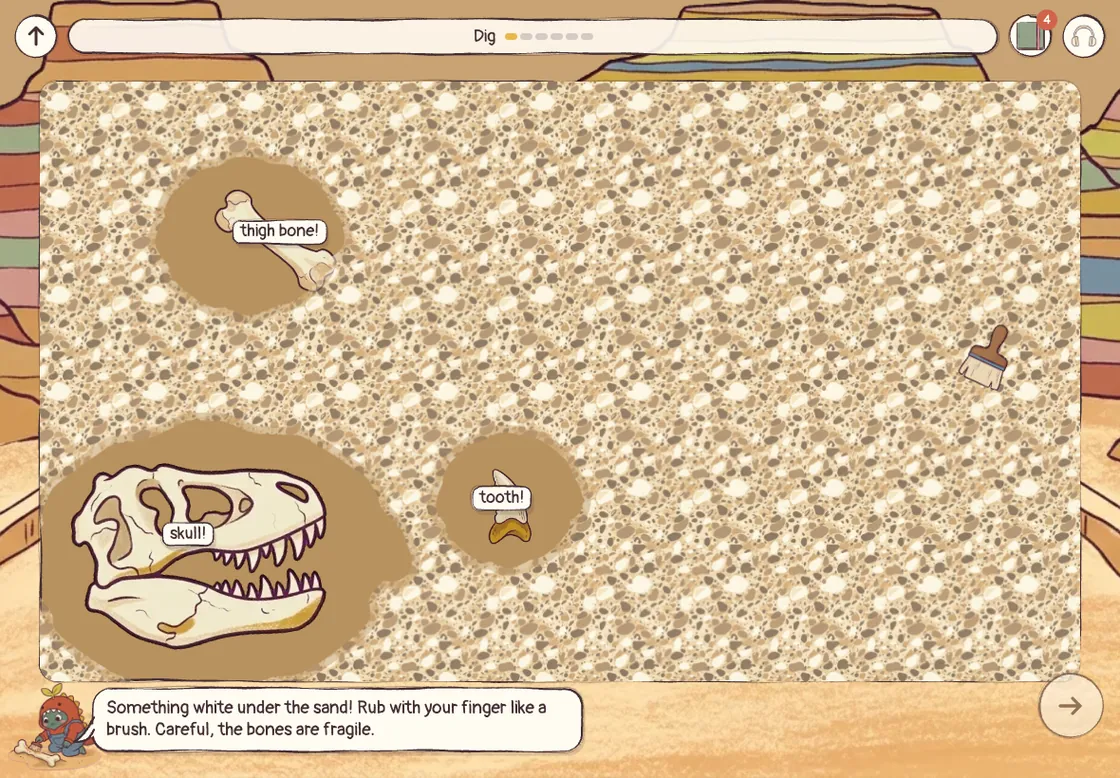
Brushes the bones free
The expedition goes where the dinosaur was really found, like Montana for T. rex. Your child carefully uncovers every bone.
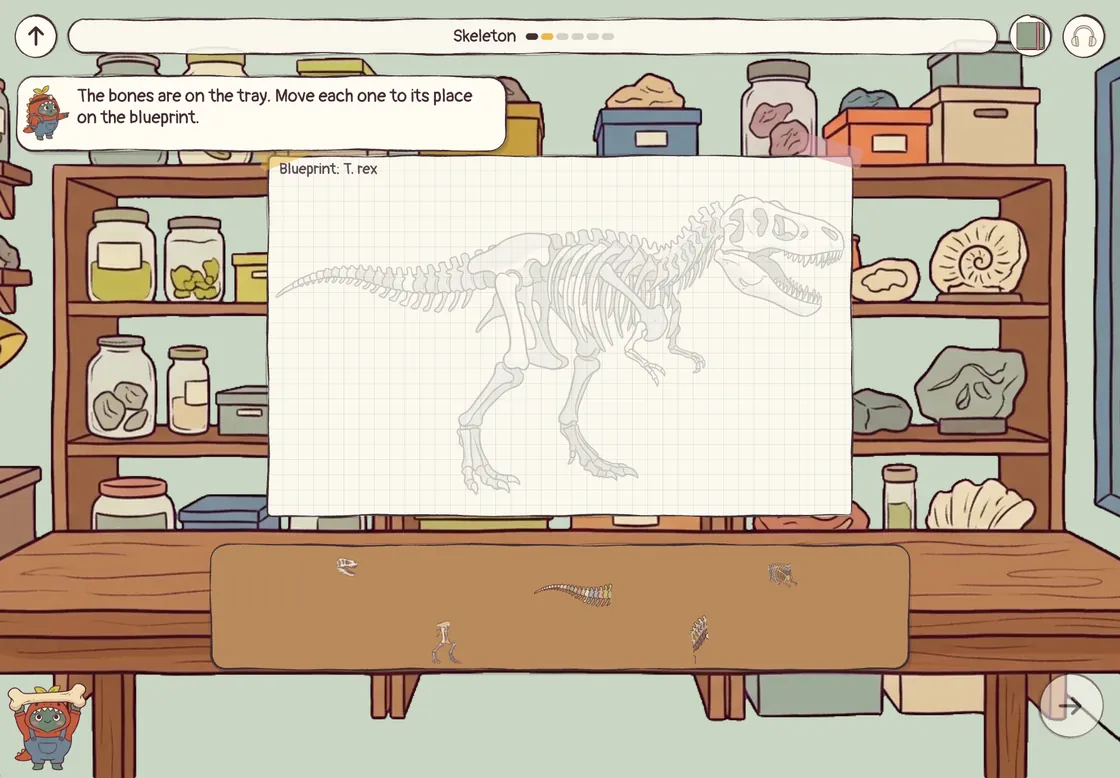
Builds the skeleton on the blueprint
Each bone has its place. Your child sees how scientists put a skeleton together for a museum.
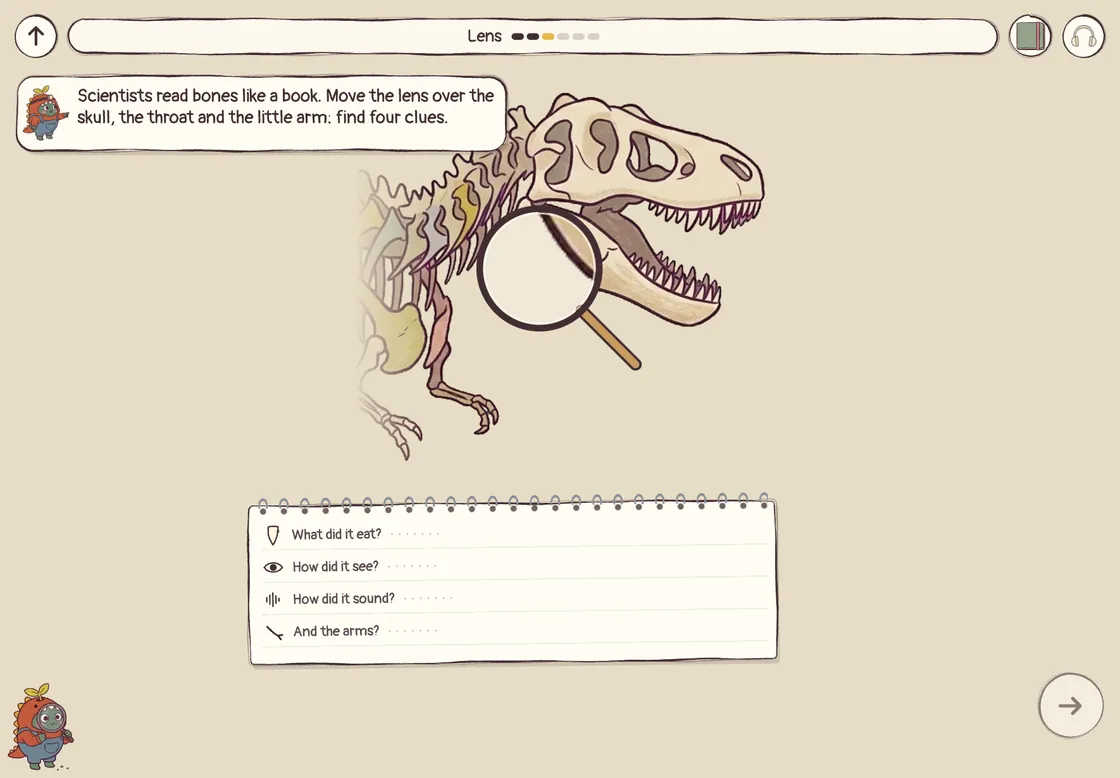
Looks at the finds through a magnifier
The magnifier shows the details scientists look for. Then your child colours the dinosaur and puts it in their own museum.
Dinosaurs in the Growney museum
Every dinosaur has its own museum page with real photos of skeletons, a map of where they are found, how it might have sounded and when it lived.
 CryolophosaurusMount Kirkpatrick, Antarctica
 StegosaurusMorrison, Colorado, USA
 DiplodocusWyoming, USA
 ArchaeopteryxSolnhofen, Bavaria, Germany
 IguanodonIsle of Wight, United Kingdom
 MicroraptorLiaoning, China
 SpinosaurusKem Kem, Morocco
 ArgentinosaurusPlaza Huincul, Argentina
 AustralovenatorWinton, Queensland, Australia
 ParasaurolophusNew Mexico and Utah, USA
 OviraptorFlaming Cliffs, Mongolia
 VelociraptorGobi Desert, Mongolia
 CarnotaurusChubut, Patagonia, Argentina
 PachycephalosaurusHell Creek, Montana, USA
 TherizinosaurusNemegt, Gobi Desert, Mongolia
 AnkylosaurusHell Creek, Montana, USA
 T. rexHell Creek, Montana, USA
 TriceratopsHell Creek, Montana, USA
What your child learns
Dino helps children see how real palaeontologists work.
- What dinosaurs were like and how they differed
- How fossils form and why bones lie in different layers of rock
- Where on Earth dinosaurs are found
- How scientists put a skeleton together and guess its colour and voice
- Why birds are relatives of dinosaurs
For parents
- Everything is read aloudGrowney reads every text, so even children who can't read yet can play.
- Real photosFrom free archives, with the author credited under each one.
- No ads, no chatsYour child sees no ads and never types in anything about themselves.
- Three languagesEnglish, Polish and Ukrainian, each with its own narrator.
Reads about dinosaurs
Short reads about the questions children ask. Every fact has a source.
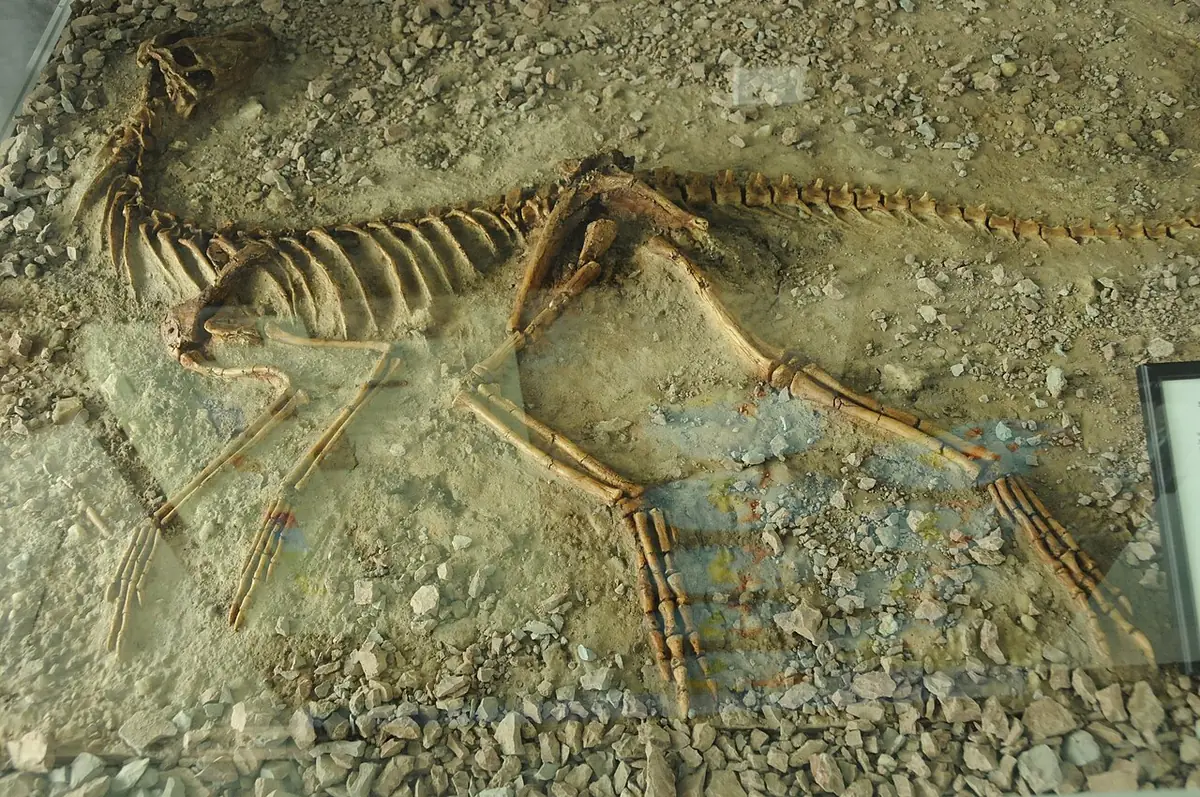 Which dinosaurs lived in Poland and Ukraine. Telling your child
Silesaurus from near Opole, Smok from Lisowice, footprints in the Holy Cross Mountains and a plant-eating dinosaur from Crimea. What scientists found in Central and Eastern Europe.
 Dinosaurs ·
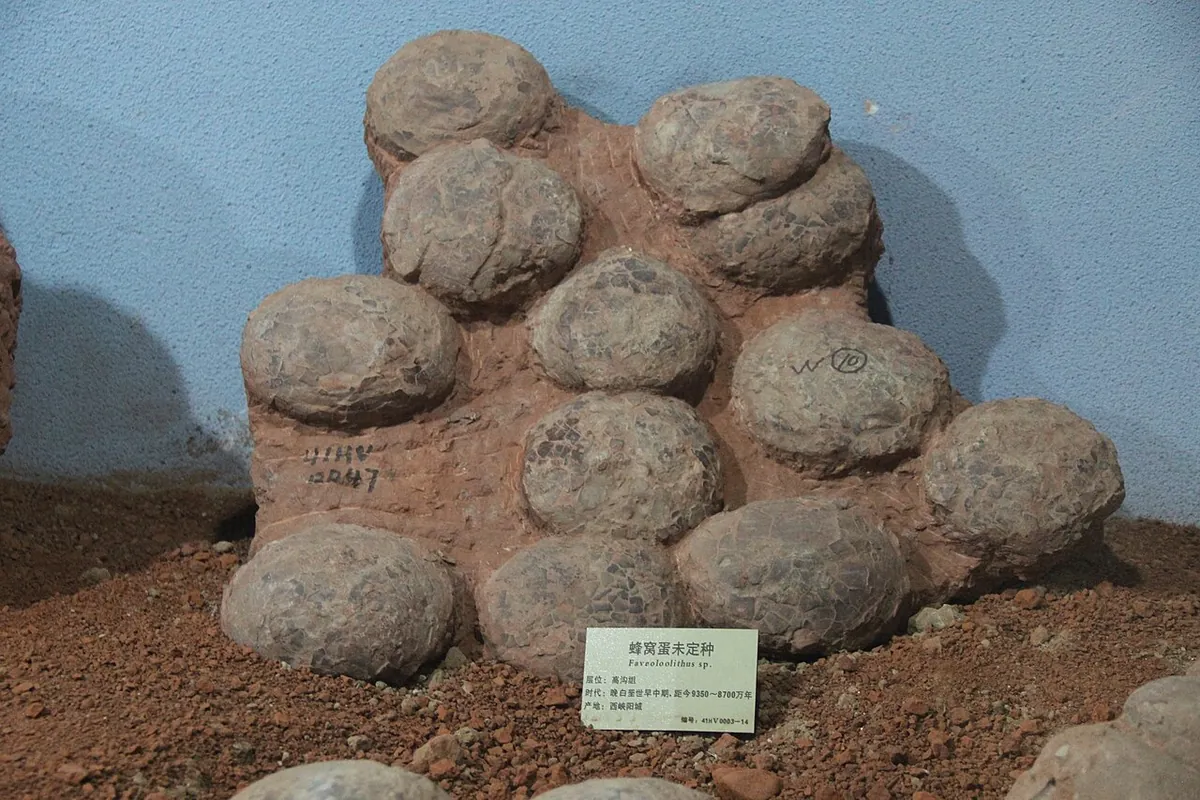 What were dinosaur eggs like? How to explain it to a child
What dinosaur eggs were like, how big they got, whether they were coloured or soft and how long a baby stayed inside. Plus a nest game to play at home.
Dinosaurs · 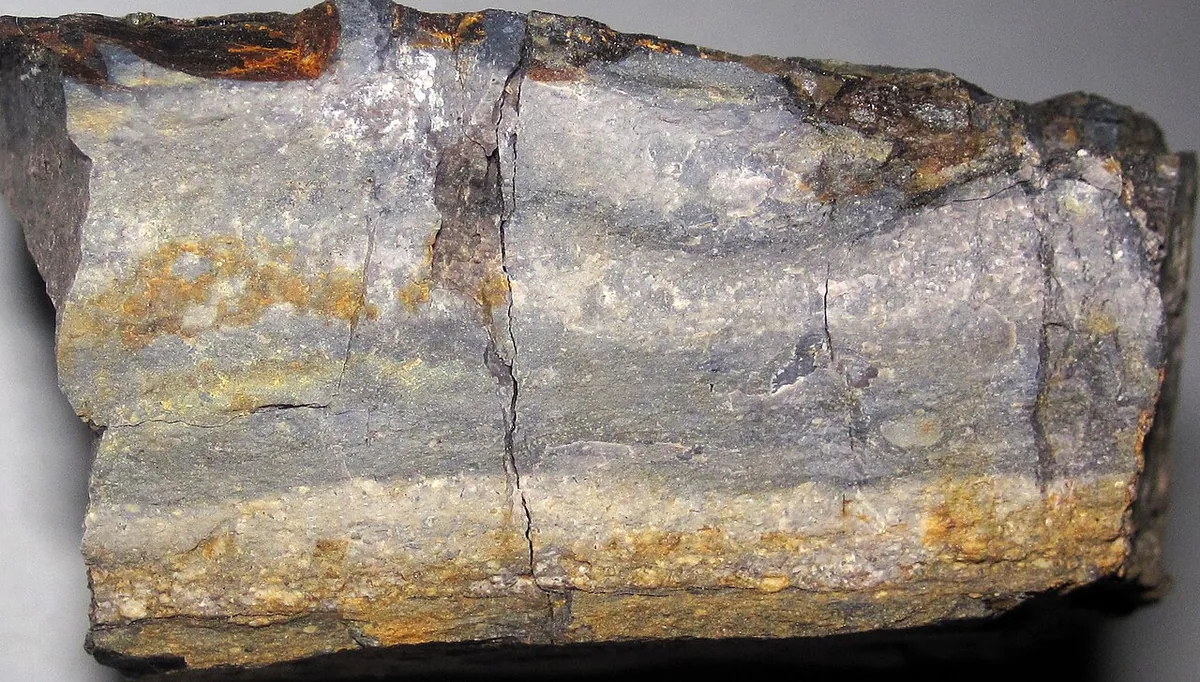 Why did the dinosaurs die out? How to explain it to a child
Why the dinosaurs died out, how scientists found an asteroid's trace in a thin layer of clay, who survived the impact and how to show a child layers of earth at home.
Dinosaurs ·
Questions from parents
Is it free to play?
Yes. In the browser at dino.growney.app everything is open and no sign-in is needed. The app for Android is free to download, everything is open for the first three days, and then you can choose a month or buy it forever.
Does my child need an account?
No. Progress is saved on the device. A grown-up can sign in with a Growney account, and then the child's progress shows on all their devices.
Which languages is it read in?
English, Polish and Ukrainian, each language with its own voice. You can switch the language at the top of the page.
Where do the facts and photos come from?
We check every fact against a source, and the photos come from free archives, mostly Wikimedia Commons. The author and licence are under each photo.
How can I limit play time?
In Growney Family a grown-up sets how long the child can play each day and answers requests for a little more time. The limit counts across all of the child's devices.

Ready to dig?
Open Dino in the browser or download it for a tablet.