 Growney
What were dinosaur eggs like? How to explain it to a child
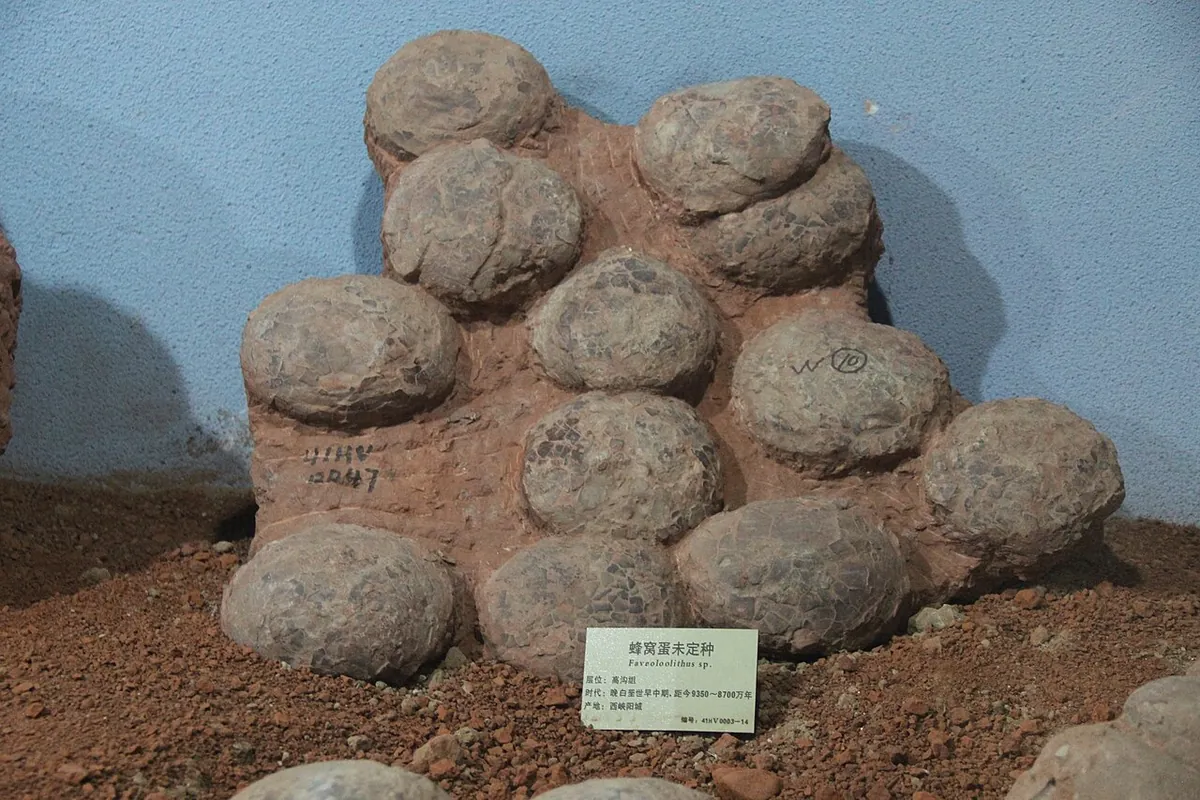

A child knows that dinosaurs hatched from eggs. The next question is what those eggs looked like. Were they enormous, like the dinosaurs themselves? The answer surprises grown-ups too, because scientists keep finding new things inside old eggs.
The answer in one sentence
The first nest was found in a desert
In 1923, an expedition from the American Museum of Natural History was working in the Gobi Desert in Mongolia, near red rocks known as the Flaming Cliffs. There they found the first eggs that scientists could say for sure were laid by a dinosaur.
Next to one nest lay the skeleton of a toothless dinosaur. The scientists decided it had come to steal the eggs, and in 1924 they named it Oviraptor, which means "egg thief". In 1993, a team led by Mark Norell from the same museum found the same kind of egg with a tiny embryo inside. The embryo was a relative of Oviraptor. So the "thief" had been sitting on its own eggs.
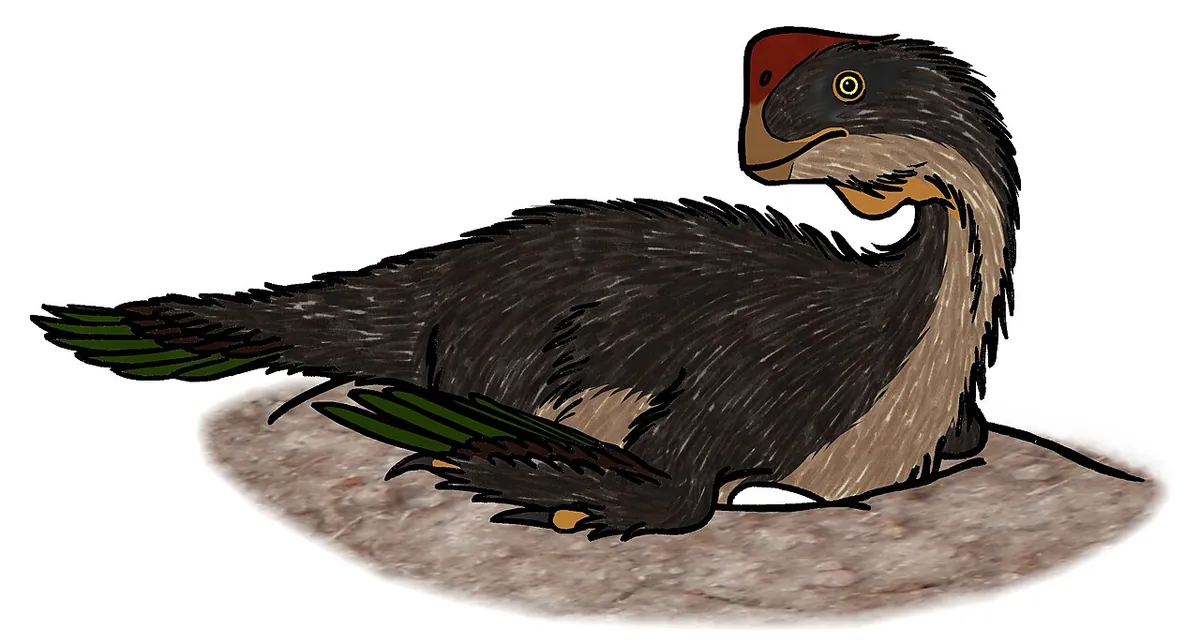

Later, several more skeletons of these dinosaurs turned up sitting right on their nests. Britannica says they sit just the way birds sit on their eggs today.
Big and small
The largest known dinosaur eggs were found in China. They were laid by Beibeilong, a giant relative of Oviraptor. The University of Alberta says each egg was roughly half a metre long.
The biggest dinosaurs of all, the long-necked titanosaurs, laid modest eggs. At a place in Argentina called Auca Mahuevo, scientists found thousands of them. They are almost round and measure 12 to 15 centimetres across.
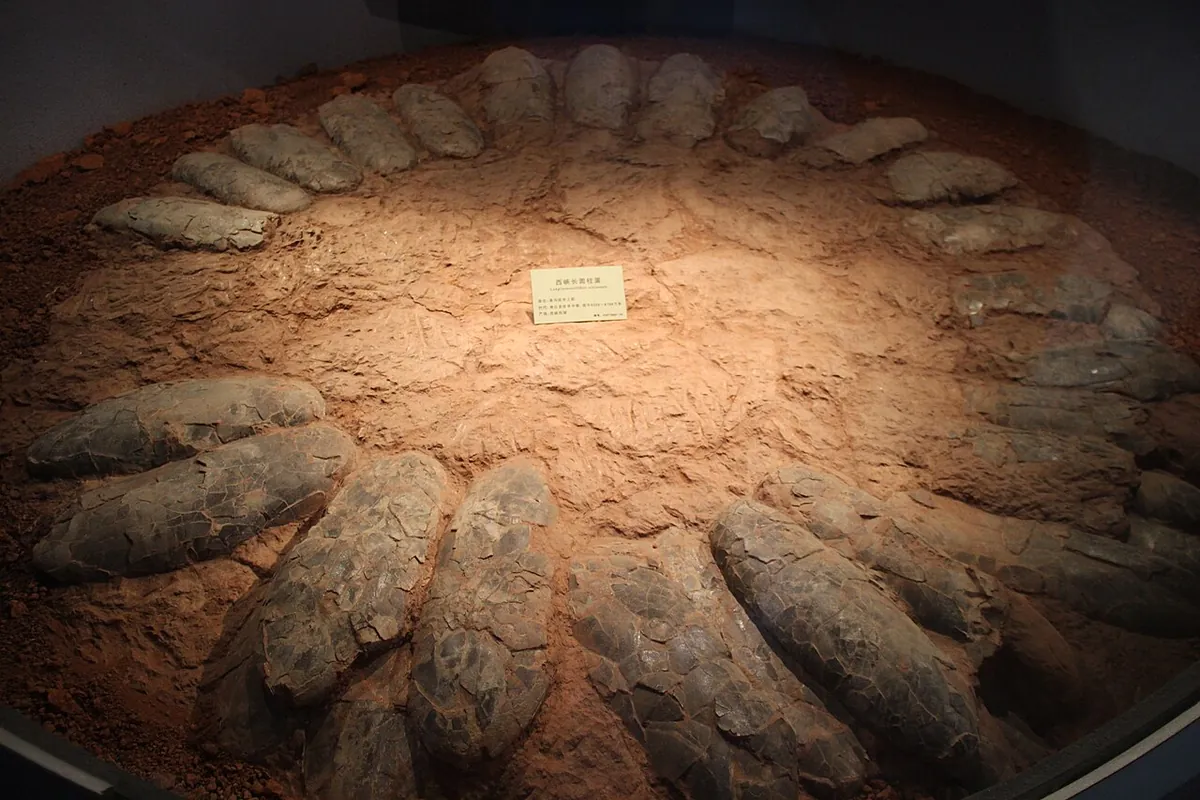

So why didn't a giant mother lay an egg the size of a fridge? The American Museum of Natural History explains why. The bigger the egg, the thicker the shell has to be so it doesn't crack. But the baby inside breathes through tiny pores in the shell. A shell that was too thick wouldn't let enough air through. So titanosaur mothers laid lots of smaller eggs instead. One clutch could hold up to 40.
Soft, hard, and coloured
For a long time, people thought all dinosaurs laid hard eggs, like a hen's. In 2020, scientists led by Mark Norell studied Protoceratops eggs from Mongolia and Mussaurus eggs from Argentina with embryos inside. The shells turned out to be soft, like those of some turtles. The team wrote in the journal Nature that the very first dinosaur egg was soft. Hard shells came later, at least three separate times in different groups of dinosaurs.
Fossil eggs can even keep their colour. Birds colour their eggs with just two pigments. One is blue-green and the other is reddish-brown. In 2017, the researcher Jasmina Wiemann and her colleagues found both in the shell of an oviraptorid egg from China. Its eggs were blue-green. In 2018, the same team tested 18 eggshell samples. The pigment showed up only in the eggs of two-legged dinosaurs closest to birds. Titanosaur eggs and the eggs of many plant-eating dinosaurs had no colour. The scientists link colour to open nests, where eggs had to be hidden from hungry eyes.
How long a baby stayed in the egg
Teeth grow a thin layer every day, a bit like a tree adds a ring every year. In 2017, Gregory Erickson and his colleagues counted these layers in the teeth of embryos. A baby Protoceratops stayed in its egg for almost three months, and a baby Hypacrosaurus, a duck-billed dinosaur, for almost six. Birds sit on their eggs for 11 to 85 days. So dinosaurs hatched much more slowly than birds, much like reptiles today.
In 2021, scientists in China described an oviraptorosaur embryo nicknamed Baby Yingliang. It lies curled up, with its head under its body and its back along the blunt end of the egg. Chicks lie the same way a few days before they hatch.
A nest game at home
- Measure. Cut a piece of string 50 centimetres long. Ask your child to guess how many hen's eggs would fit along it. Check by laying eggs from the fridge in a row.
- Nest. Make a ring of cushions and put toy balls or balls of wool inside. Your child sits in the middle and covers the "eggs" with their arms, like an Oviraptor.
- Colours. Paint hard-boiled eggs blue-green and add brown speckles. Hide them in the grass or on a rug and go looking. Which egg is the hardest to find?
- Calendar. Mark the day that is three months from now. That is how long a baby Protoceratops waited to hatch. What will happen in your family before then?
One more amazing fact
Maiasaura means "good mother lizard". In 1978, a nesting site of these dinosaurs was found in Montana, with eggs and babies. Britannica says the young could not walk straight after hatching and needed care from adults. The Natural History Museum in London adds that scientists still argue about how caring these parents really were.
You can dig up a Maiasaura egg in Growney Dino. There, children excavate the world and find a nest of eggs from 1923 in Mongolia and a whole field of giants' nests in Argentina. In the Oviraptor story, they arrange the eggs in a ring themselves, just like in a real nest.