 Growney
What causes goosebumps? How to explain it to a child

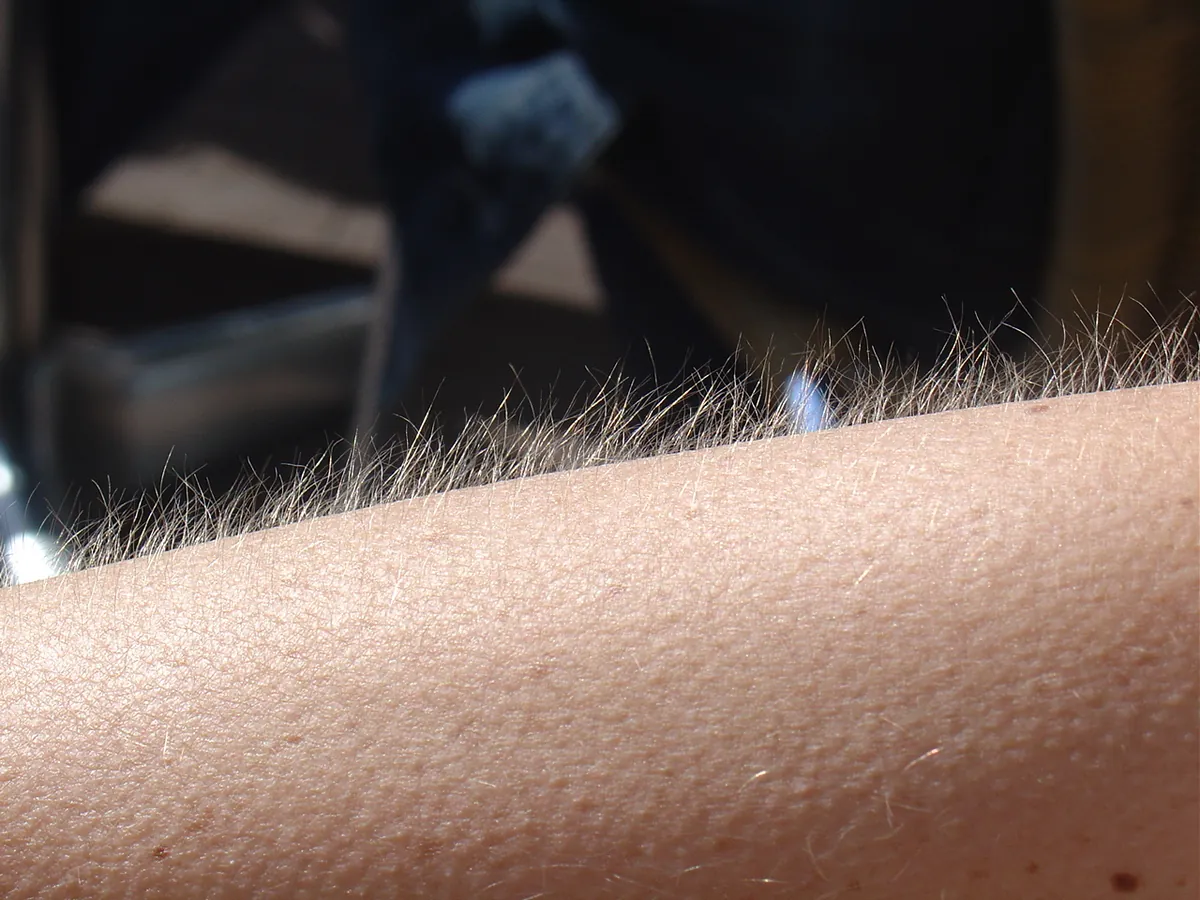
A child steps out of a warm bath, and suddenly their arms are covered in little bumps. The tiny hairs stand up and the skin looks like orange peel. They ask what is happening. These are goosebumps. We got them from our very distant furry ancestors.
The answer in one sentence

A small muscle next to each hair
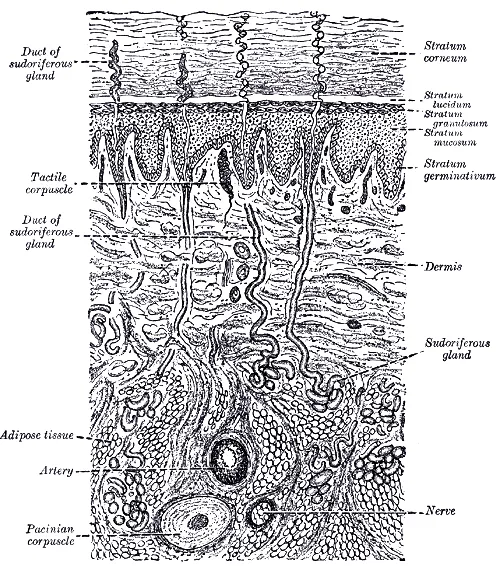
Each hair grows from a tiny pit in the skin called a hair follicle. Britannica says a small muscle that raises the hair is attached to each follicle. Only the follicles that grow the finest, downy hairs go without one. When the muscle contracts, the hair stands almost upright and the follicle is pulled up a little. A bump appears on the skin.
We cannot control this muscle. Elsevier's anatomy reference explains that it takes its orders from the nerves of the sympathetic nervous system. That is why we cannot make goosebumps appear or stop them just by wanting to. Doctors call them by the Latin name cutis anserina, which means "goose skin". The Merriam-Webster dictionary says they come from cold, fear, or a sudden rush of excitement.
What goosebumps do for animals
In furry animals, this muscle keeps them warm. When the fur stands up, more air sits between the hairs. That layer of air holds in heat, like a duvet. Scientists at Penn State explain this in a paper on how monkeys and apes keep warm.
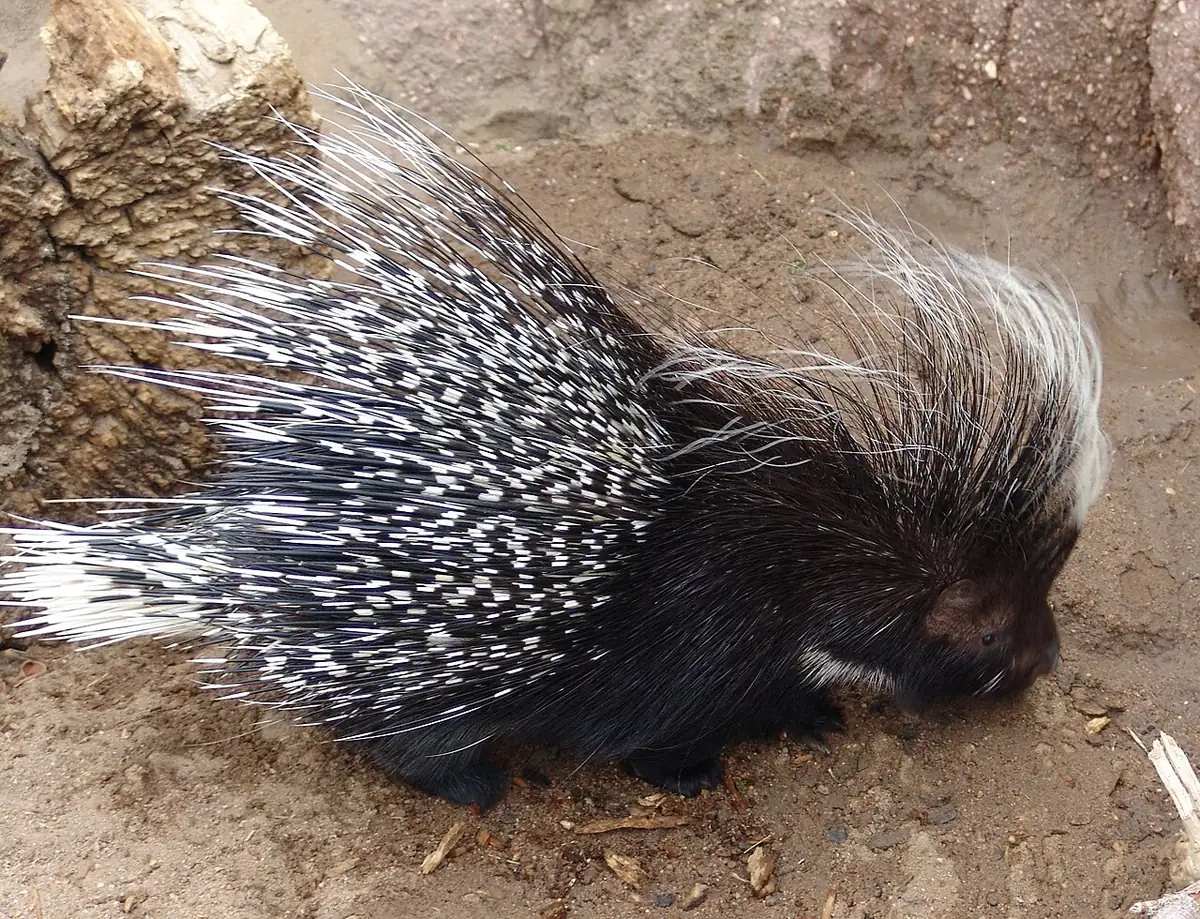
The second job of these muscles is to scare off enemies. San Diego Zoo says a porcupine has a muscle at the base of every quill. When the animal is frightened or excited, the quills stand on end. A crested porcupine can then look two or three times bigger. If that is not enough, it stamps its feet, growls, and grunts to frighten off the predator. Cats do something similar. Maddie's Fund, an American charity that supports animal shelters, lists an arched back, fur standing on end, and a puffed-up tail among the signs of a frightened cat.

So what are goosebumps for in people?
We have hardly any fur, so goosebumps cannot warm us up or scare anyone away. Dr Robert Shmerling of Harvard Health Publishing writes that it is still unclear how important they are for humans.
But goosebumps also come with joy. Scientists at the Montreal Neurological Institute asked people to bring their favourite music and watched their brains in a scanner. When the music sent shivers through their bodies, the brain released dopamine, a chemical linked to pleasure. Dopamine was released even while a person was simply waiting for their favourite part of the piece.
The goosebump hunters experiment
- Take a magnifying glass and look at your child's forearm in a warm room. Notice how the hairs lie.
- Cut a window the size of a fingernail in a piece of paper. Hold it against the arm and count the hairs in the window.
- Lay a cool, damp towel on the arm for a minute, or stand by an open window.
- Look through the magnifying glass again. Have the hairs stood up, and is there a bump next to each one?
- Another time, play a song that gives someone in the family shivers. Who spots the goosebumps first?
- Write down whether the cold or the music worked better.
Goosebumps that grow fur
In 2020, Ya-Chieh Hsu's lab at the Harvard Stem Cell Institute found in mice that goosebumps have one more job. The nerve that tightens the muscle by the hair also touches the cells that grow new hair. When the cold lasts a long time, the nerve works harder and those cells start growing new hair. In the scientists' words, the nerve sends the signal, and the muscle holds the nerve next to those cells like a bridge. Without the muscle, the nerve cannot reach them. So goosebumps help animals in the cold not only right away, but for later too. Ya-Chieh Hsu suggests that this may be how fur grows thicker in the cold. For people it is still a puzzle, because the experiments were done on mice.
And a child who has just studied their own hairs through a magnifying glass can look deeper and find out what else is hidden under the skin.