 Growney
Why did T. rex have such short arms? What scientists say
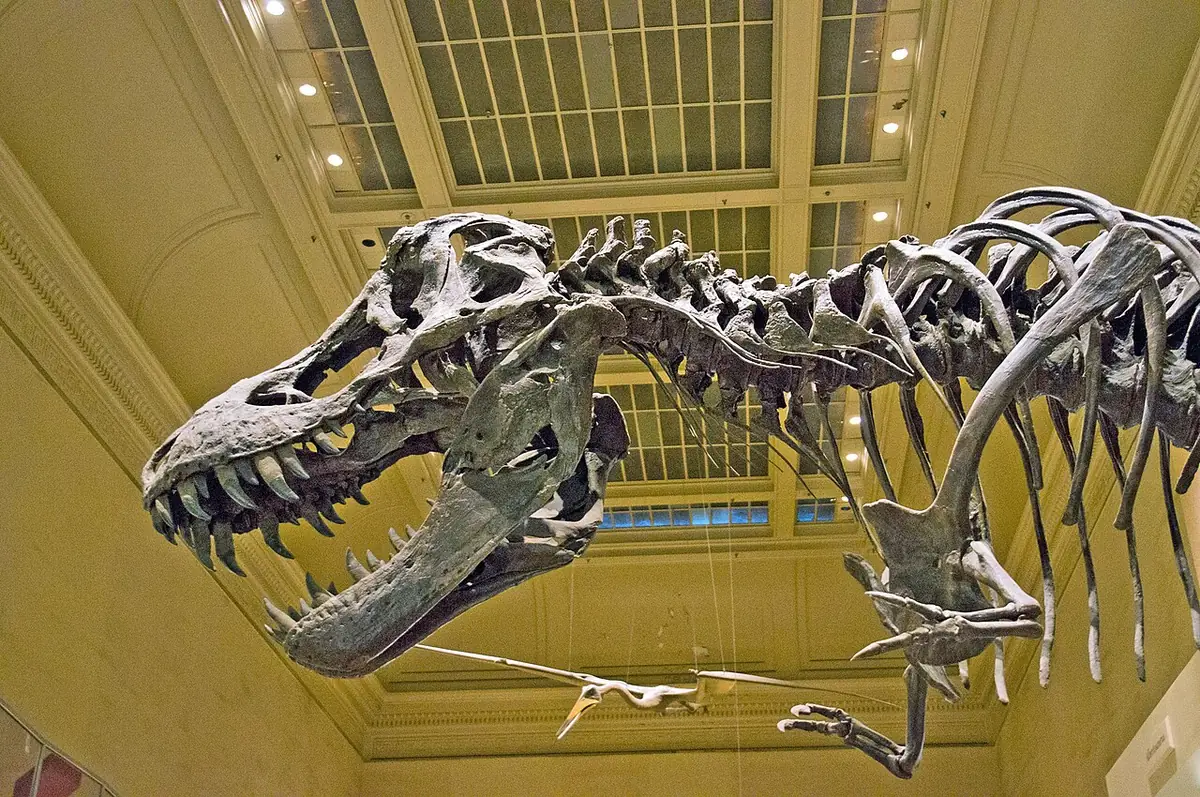

Children love to laugh at T. rex: such a huge, fearsome predator, yet its arms are tiny! Scientists have wondered about this for a long time too. While there is still no single answer, a new, highly intuitive explanation emerged in 2026.
The one-sentence answer
How short were they?
An adult T. rex could reach about 14 metres in length. Its skull was around one and a half metres long, yet its arm measured a mere 90 centimetres. Palaeontologist Kevin Padian from the University of California, Berkeley compares this to a person 1.8 metres tall having arms just 13 centimetres long.
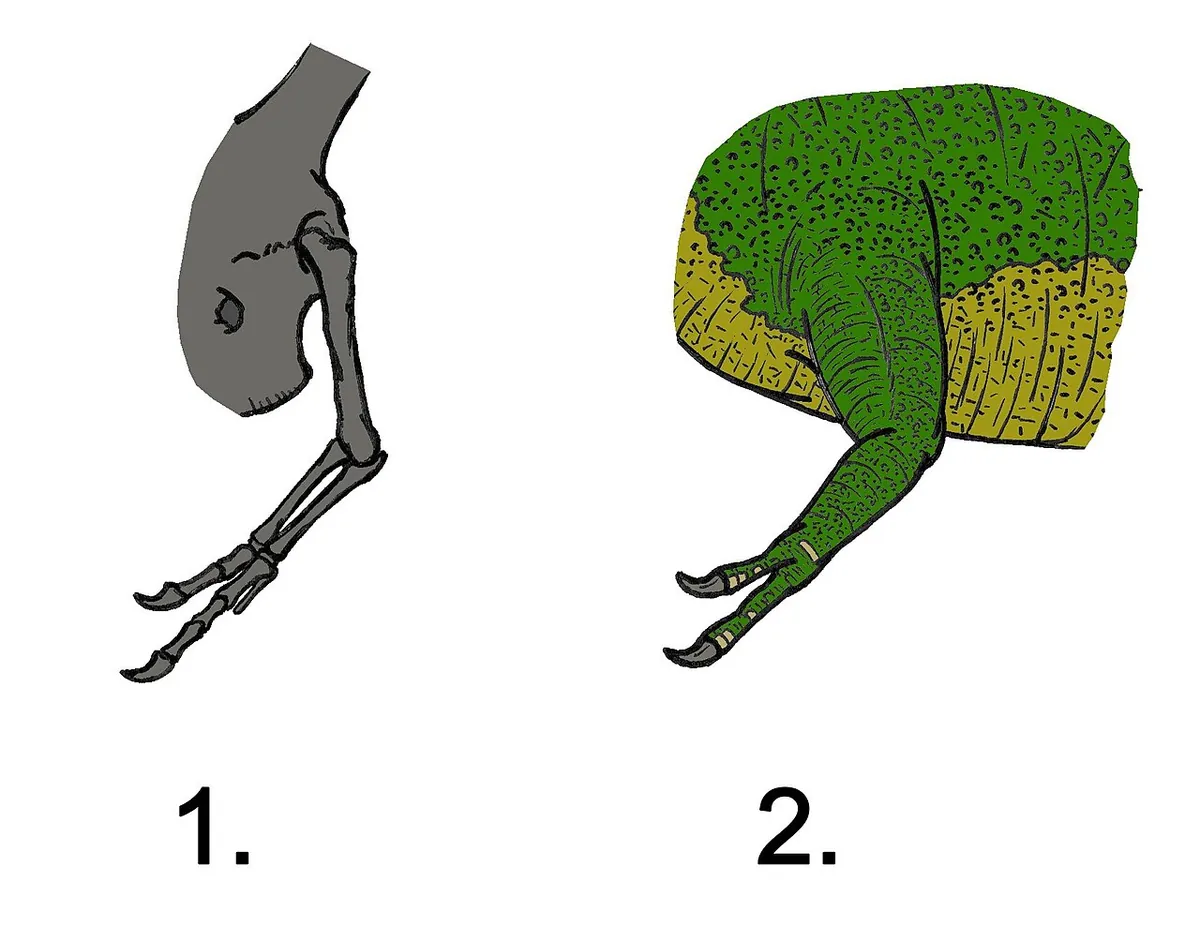
Each hand featured only two clawed fingers. By contrast, earlier tyrannosaurs had longer arms with three fingers. Mark Norell from the American Museum of Natural History in New York explains that the arms of T. rex were most likely an evolutionary leftover that was slowly being phased out.
Scientists once thought quite differently. When the museum unveiled its first complete T. rex skeleton in December 1915, each hand had three claws. Because no genuine arm bones had been found yet, the team modelled them after Allosaurus. Just a year earlier, Canadian palaeontologist Lawrence Lambe had described the hand of Gorgosaurus, a close relative of T. rex: it had only two fingers, and none were missing.
Weak or strong?

The very first T. rex arm bones were discovered in 1988 by Kathy Wankel in Montana. She was relaxing near the Fort Peck Reservoir when she spotted them in the ground. A team later excavated a skeleton there with roughly 80 per cent of its bones preserved.
In 2001, palaeontologists Kenneth Carpenter and Matt Smith examined these arm bones in detail. They calculated that the upper arm muscle was about three and a half times stronger than a human's. So the arms were far from feeble! They suggested that T. rex grabbed prey with its massive jaws and used its arms to pin the struggling animal tightly against its chest.
Out of harm's way
In 2022, Kevin Padian proposed another compelling idea. Perhaps tyrannosaurs fed in groups, with several large predators tearing at the same carcass. In the chaos, a long arm positioned near another predator's jaws could easily be bitten. A deep bite meant severe bleeding, infection, or even death. Short arms stayed safely out of reach from rival teeth. Padian himself notes this is a hypothesis that still requires testing.
The head did all the work

In May 2026, researchers from University College London and the University of Cambridge compared 82 species of predatory dinosaurs. They discovered that arms shrank in at least five distinct groups, with each group arriving at this trait independently.
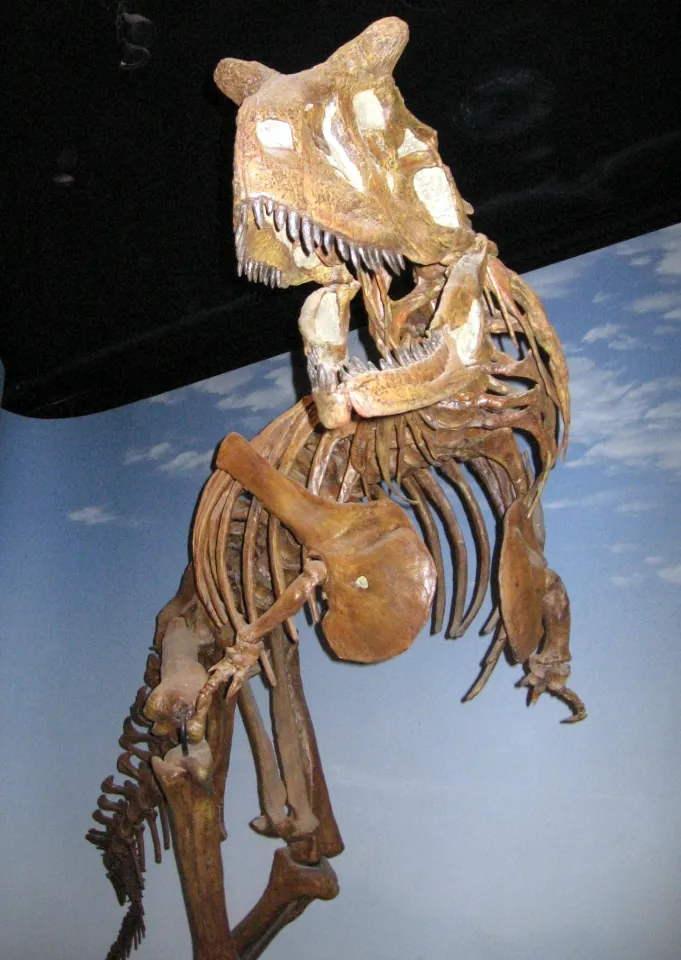
Their key finding was this: arms did not shrink simply because the animal grew gigantic, but rather when it developed an exceptionally strong skull and crushing jaws. In terms of skull strength, T. rex ranked highest of all. Lead author Charlie Roger Scherer explains that the head effectively took over the role of the arms. Grabbing a 30-metre sauropod with claws is impractical, but biting it works. Notably, the predator Carnotaurus had arms even smaller than those of T. rex.
The scientists carefully note that they found a strong correlation, not definitive proof of cause. It is very possible that several of these explanations are true at the same time.
Try it at home
- Tuck your elbows tightly against your sides and try picking up a soft toy from the floor. Your child will quickly feel how limited the reach of T. rex arms really was.
- Measure your child's height with a tape measure. Cut a strip of paper 15 times shorter. That is roughly how long their arm would be if they had T. rex proportions.
- Draw two dinosaurs together: one with long arms like its distant ancestors, and another with a huge head and tiny arms. Talk about how each one would have hunted.
- Play "The Scientists' Debate". Let everyone pick one explanation and defend it. Remember, no one knows the definitive answer just yet!
One more amazing thing
Until 1988, no human had ever seen an actual T. rex arm bone. Museum displays featured reconstructed arms based on guesswork that even got the number of fingers wrong. Kathy Wankel's discovery changed everything. Every new fossil unearthed from the ground still has the power to completely rewrite what we know about dinosaurs.