 Growney
How astronauts sleep, eat and wash on the ISS, explained simply
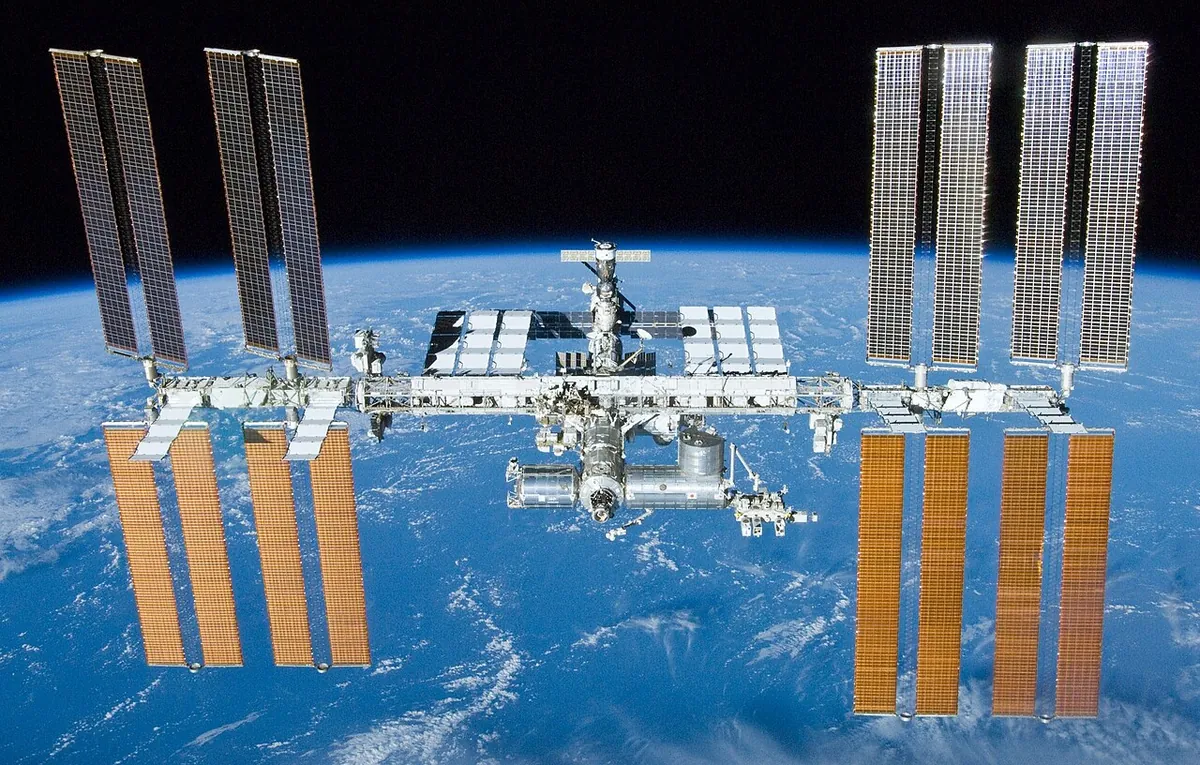

The first time a child sees an astronaut floating in mid-air, the questions start pouring out. Where do they sleep? How do they eat soup? Is there a shower up there? In weightlessness, every ordinary job becomes a puzzle. The answers are simple and sometimes funny.
The one-sentence answer
A bed on the wall
The International Space Station goes round Earth in an hour and a half. In one day, the crew sees 16 sunrises and 16 sunsets. The view out of the window tells them nothing about the time, so they go to bed by the timetable.
There is no up or down on the station, so nobody needs a bed. Each astronaut has a small cabin of their own with a sleeping bag inside. The bag is tied to the wall so the sleeper does not drift off and bump into equipment. Some wear an eye mask because the Sun shines through the window. Others use earplugs because the fans on the station hum all the time.
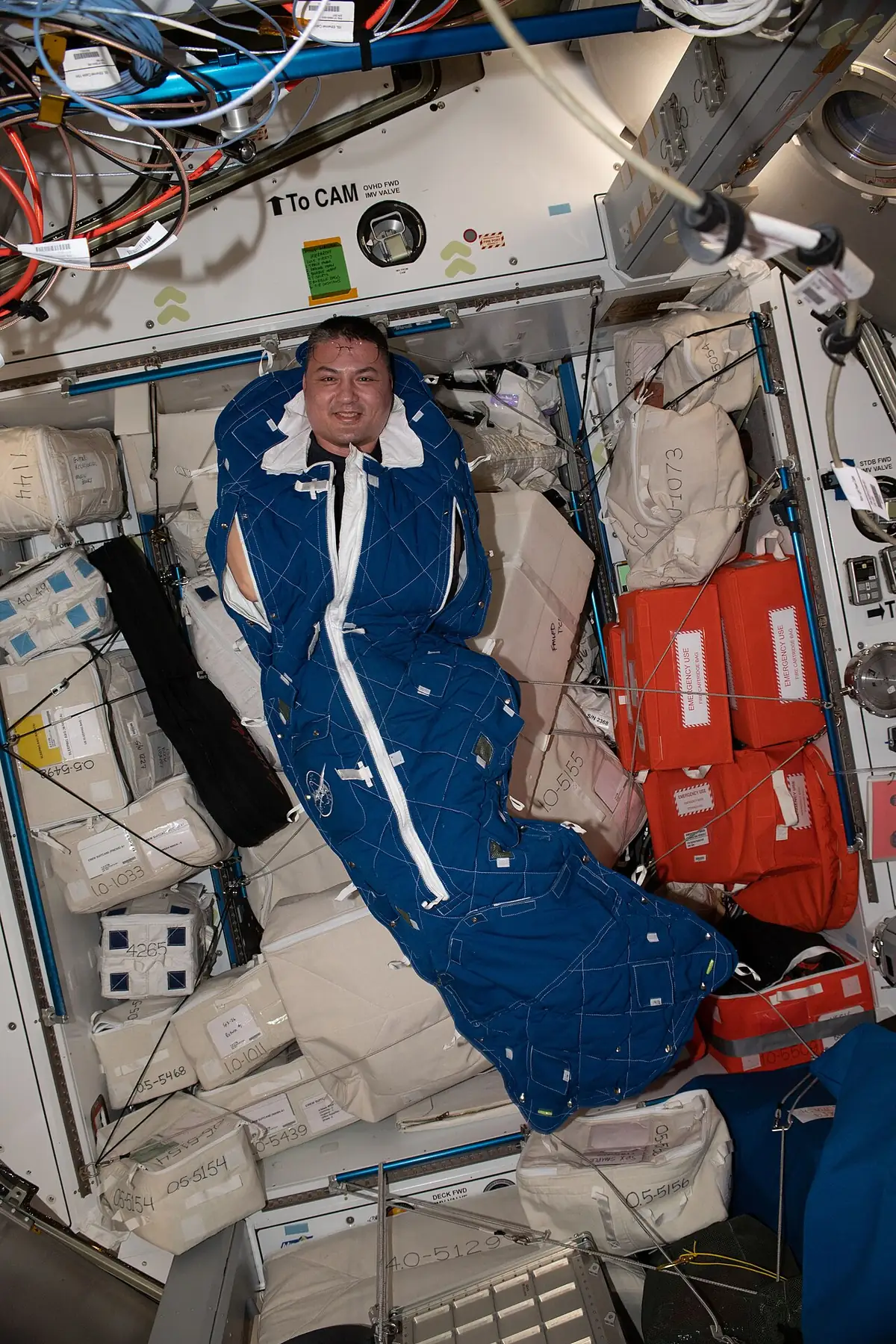

Without a fan, sleeping there would even be dangerous. On Earth, the air we breathe out drifts away from our face on its own. In weightlessness, it stays around the head like an invisible bubble. That is why every cabin has a vent that blows from head to feet.
Lunch without crumbs
Hardly anyone eats bread on the station. Crumbs fly around the cabin and can get into equipment, eyes or noses. So astronauts take tortillas instead. They do not crumble, and a sandwich is simply rolled up inside one.
Salt and pepper have the same problem. You cannot sprinkle them in weightlessness. The salt is dissolved in water and the pepper is mixed with oil, and both are squeezed onto food in drops from little bottles.
Many meals travel to the station dried. Before lunch, an astronaut adds hot water to the pouch, and the soup or porridge is ready. Other dishes are warmed in a small oven.
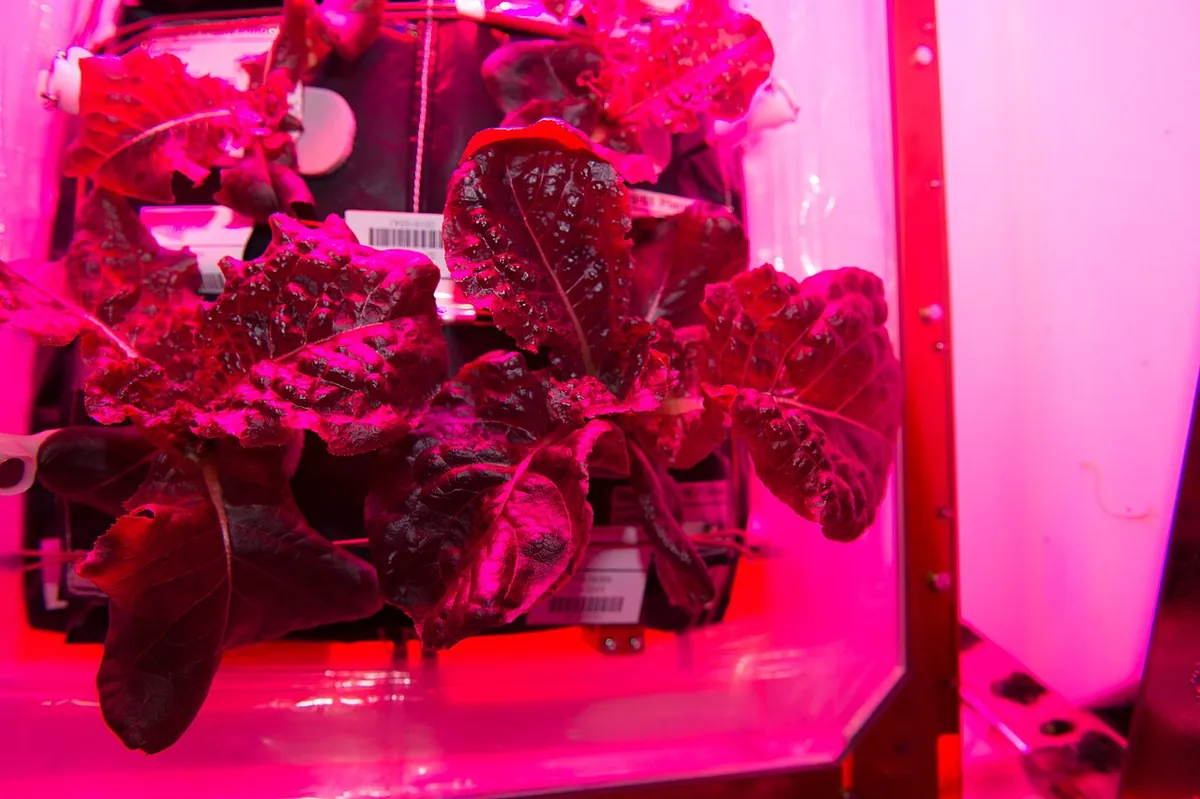

Sometimes there is fresh salad too. On 10 August 2015, astronauts Scott Kelly, Kjell Lindgren and Kimiya Yui tasted lettuce that had grown on the station in a small garden for the first time. They ate half of the crop and sent the other half back to scientists on Earth.
No shower
Water is scarce on the station, and in weightlessness it does not run down but gathers into blobs. So there is no shower. Astronauts wipe themselves with damp towels and wash their hair with a special shampoo that does not need rinsing. Towels are scarce too. A new one comes about every five days, and the old one is then used for cleaning.
Teeth are brushed with an ordinary brush and toothpaste. There is just no sink to spit into. Usually, the toothpaste goes into a towel, and sometimes a little is simply swallowed.
The most amazing part is the water. The station collects moisture from the air, which means what the crew breathes out and sweats, and it even cleans urine. All of that turns back into clean drinking water. In 2023, NASA reported that the station recovers 98 per cent of its water.
A space day game at home
- Make a "space sandwich". Roll the filling in a tortilla and check whether any crumbs are left on the table.
- Dissolve a pinch of salt in a spoonful of water and season the sandwich in drops, as on the station.
- Try washing your hands without a tap. Just a damp towel and a little soap.
- In the evening, lay a sleeping bag on the floor. Ask your child how they would tie it to the wall if the room had no up or down.
- Before bed, switch a lamp on and off sixteen times. That is how many sunrises astronauts see in one day.
What the station sees
In one day, the station circles the whole planet 16 times. Oceans, deserts, mountains and clouds slide past beneath it, and the Sun rises over a new place every time. So your child's next question will probably be this one: "What does Earth look like from space?"