 Growney
Why are planets round? How to explain it to a child
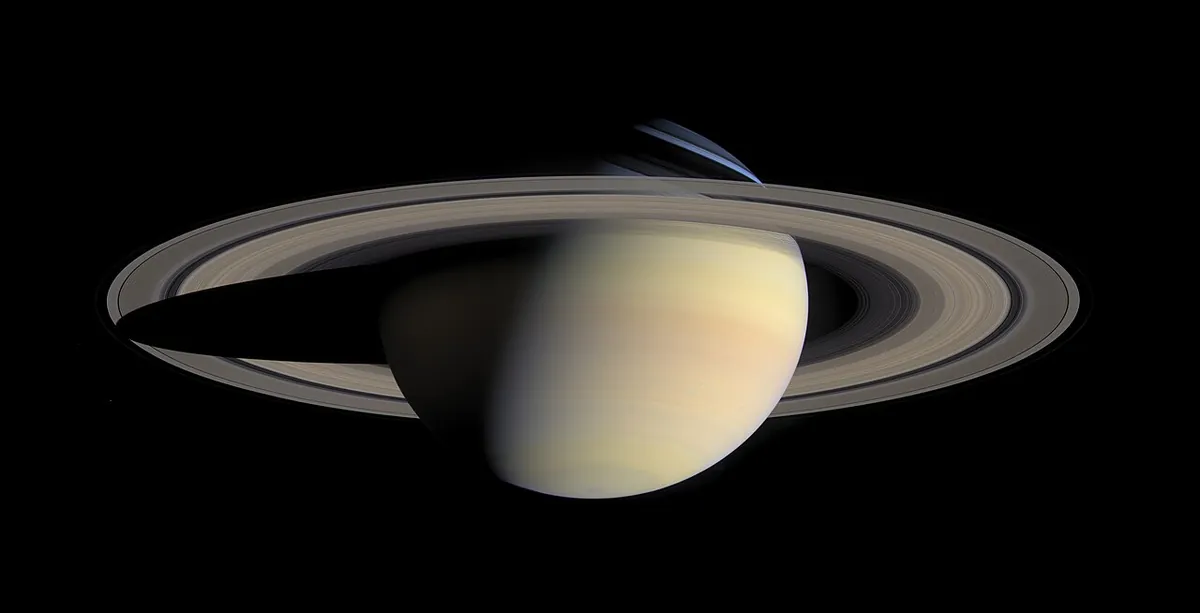

Children draw the Sun, Earth and Moon as circles long before they know what a planet is. Then one day they ask why they are round and not square. The answer is short, and you can show it with your hands in a few minutes.
The one-sentence answer
A pull towards the middle
That pull is called gravity. It keeps us on the ground and brings a ball back down when we throw it up. NASA explains that planets grew from dust and rock that stuck together. The bigger the clump became, the harder it pulled in new pieces.
Gravity pulls everything towards the middle of a planet, and it pulls the same way from every side. If a bump grows somewhere, its weight presses down until it sinks. A dip slowly fills in. The smoothest shape, where every point on the surface is the same distance from the centre, is a ball.
Try picturing a planet shaped like a cube. Its corners would stick out far from the centre, while the middle of each face would sit closer. Gravity would drag the corners down, and rock would slide off them towards the middle. In time the cube would crumble into a ball. That is why there are no square planets.
Scientists even wrote it into the rules. In 2006 the International Astronomical Union decided that a body can only be called a planet if it is massive enough for its own gravity to make it nearly round.
Why space rocks are not round
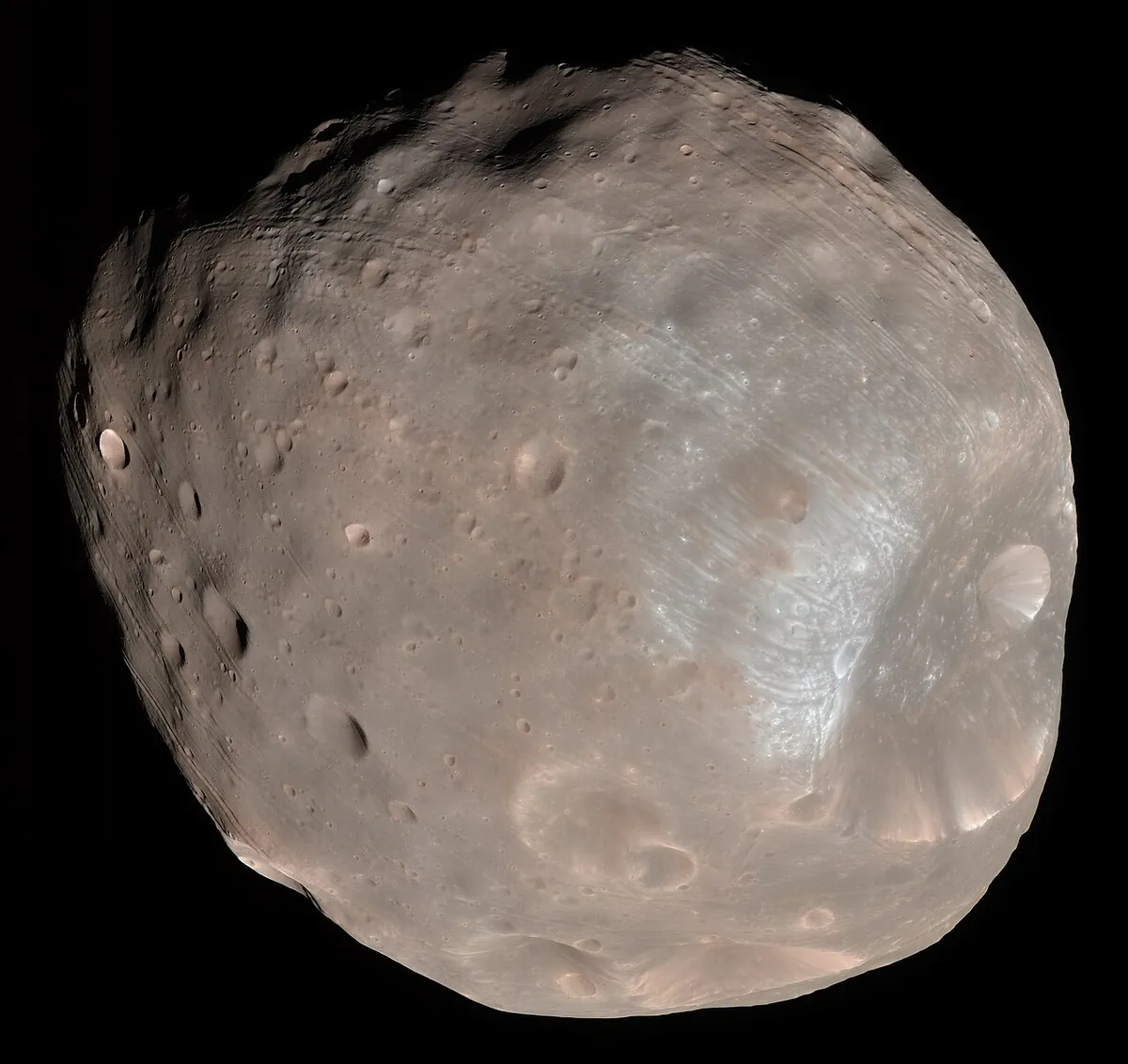

Not everything in space is a ball. Mars has a moon called Phobos. NASA describes it as a potato about 27 by 22 by 18 kilometres. It is too small, and its gravity cannot pull the rock into a ball.
Nearly all asteroids have odd shapes too, and only a few come close to round. The largest of them, Ceres, is about 950 kilometres across.
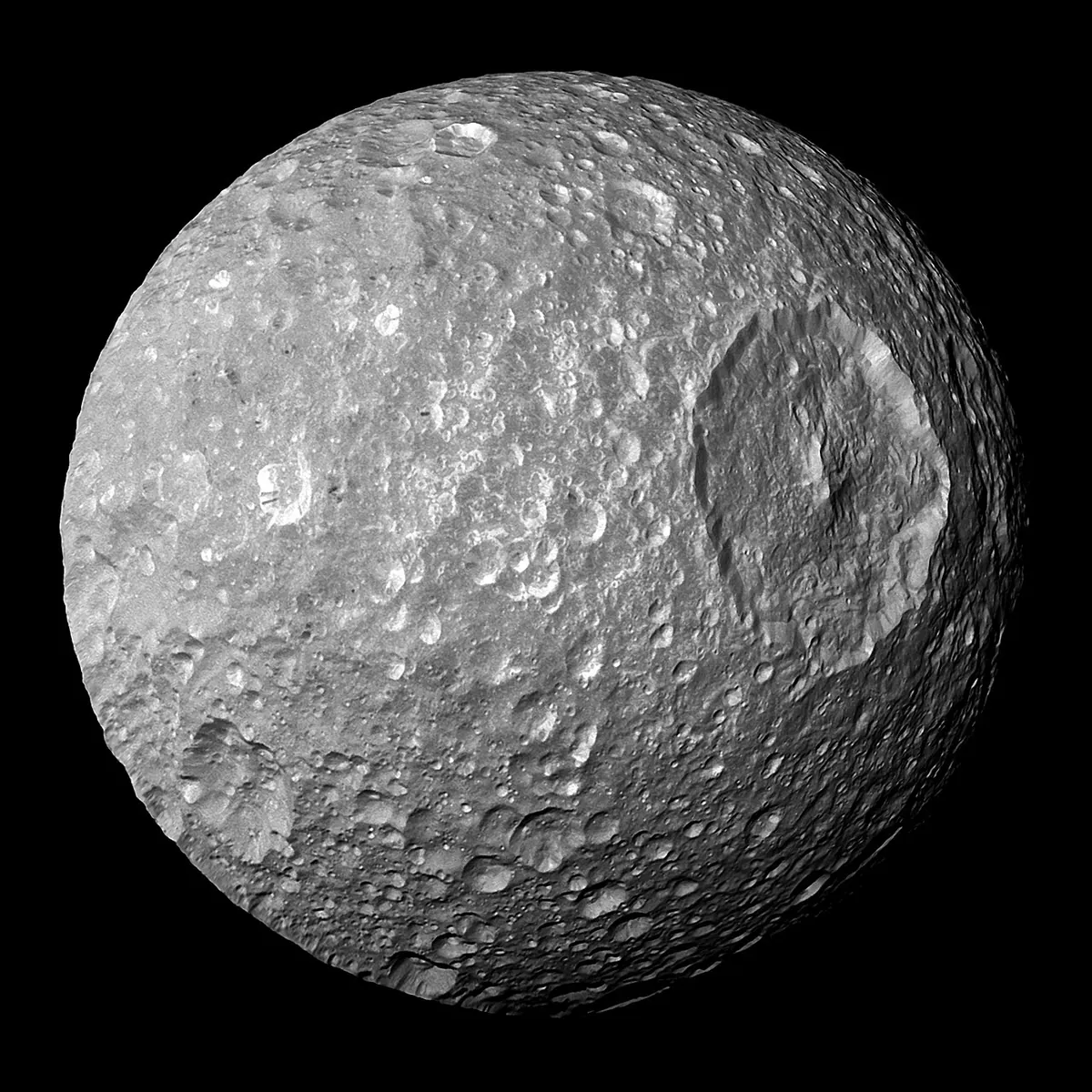
The line falls somewhere in between. Saturn's moon Mimas is almost 400 kilometres across. NASA says it is just short of a true ball and slightly egg-shaped. Its small neighbour Pandora stayed lumpy. It did not have enough gravity to become round.
Round, but a little squashed

There is one more thing that stops a ball from being perfect. Planets spin. Spinning makes their middle bulge outwards a little, like a skirt when you twirl.
Earth is about 43 kilometres wider across the equator than from pole to pole. We never notice, because Earth itself is almost 13,000 kilometres across. If you shrank Earth to the size of a football, the difference would be less than a millimetre. Saturn spins much faster, and one turn takes less than 11 hours. So it is almost 12,000 kilometres wider across the equator. You can see it clearly in the photo at the top. Mimas, too, is nearly a tenth wider across its equator than between its poles.
Try it at home
- Play gravity. A few people spread out around the room with a cushion in the middle. On the signal everyone takes a step towards the cushion, then another, until they stand tightly together. Look down and see what shape you have made.
- Make a planet. Cut modelling clay into small bits and press them together one by one. At first you get a lumpy clump. Now squeeze it equally from every side with your palms, and it turns into a ball. That is how the gravity of a big planet works.
- Make Phobos. Take just a few bits and press them lightly with your fingertips. There is not much force, so you get a potato.
- Spin a planet. Push a cocktail stick through a soft clay ball and roll it quickly between your palms. Talk about what would happen to a ball that spun very fast.
One more amazing fact
Far beyond Neptune there is a dwarf planet called Haumea, nearly the size of Pluto. It turns once on its axis in only four hours. Because of that fast spin, NASA compares its shape to a slightly deflated American football. Scientists are still working out how it came to spin so fast.