 Growney
Why is the sky blue and the sunset red? Explaining it to a child
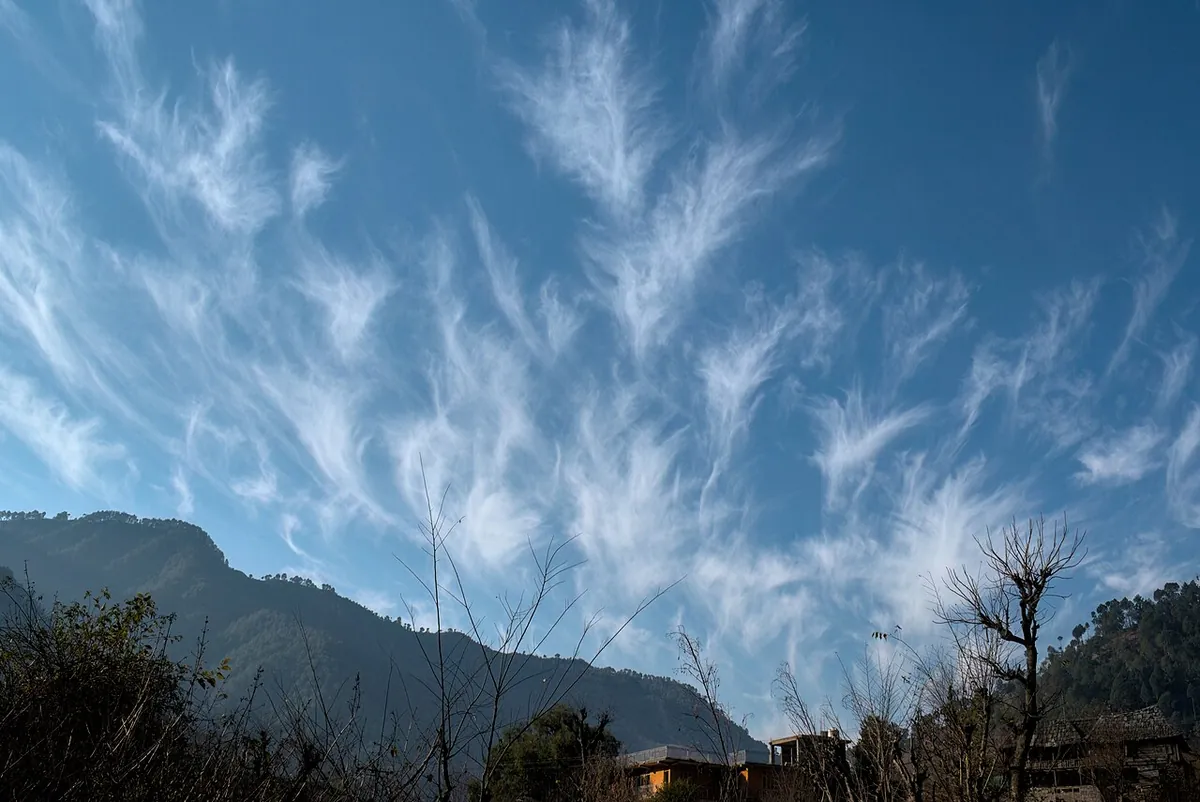

The sky is one of the very first things children ask about. It’s overhead every single day, and every day it looks just a little bit different. The good news is that the answer is remarkably simple, and you can demonstrate it right in your kitchen in under five minutes.
The one-sentence answer
What is actually happening
Sunlight looks white to us, but it actually contains all the colours of the rainbow mixed together. Each colour travels in waves of different lengths: red waves are long, while blue waves are short.
Our air is full of tiny gas particles. The short blue waves bump into these particles and bounce off in every direction much more easily than the longer red ones. So, wherever we look, scattered blue light is shining down at us. Closer to the horizon, the sky looks paler because the light has travelled through a thicker layer of air, causing the colours to mix back together.
Why the sunset is red
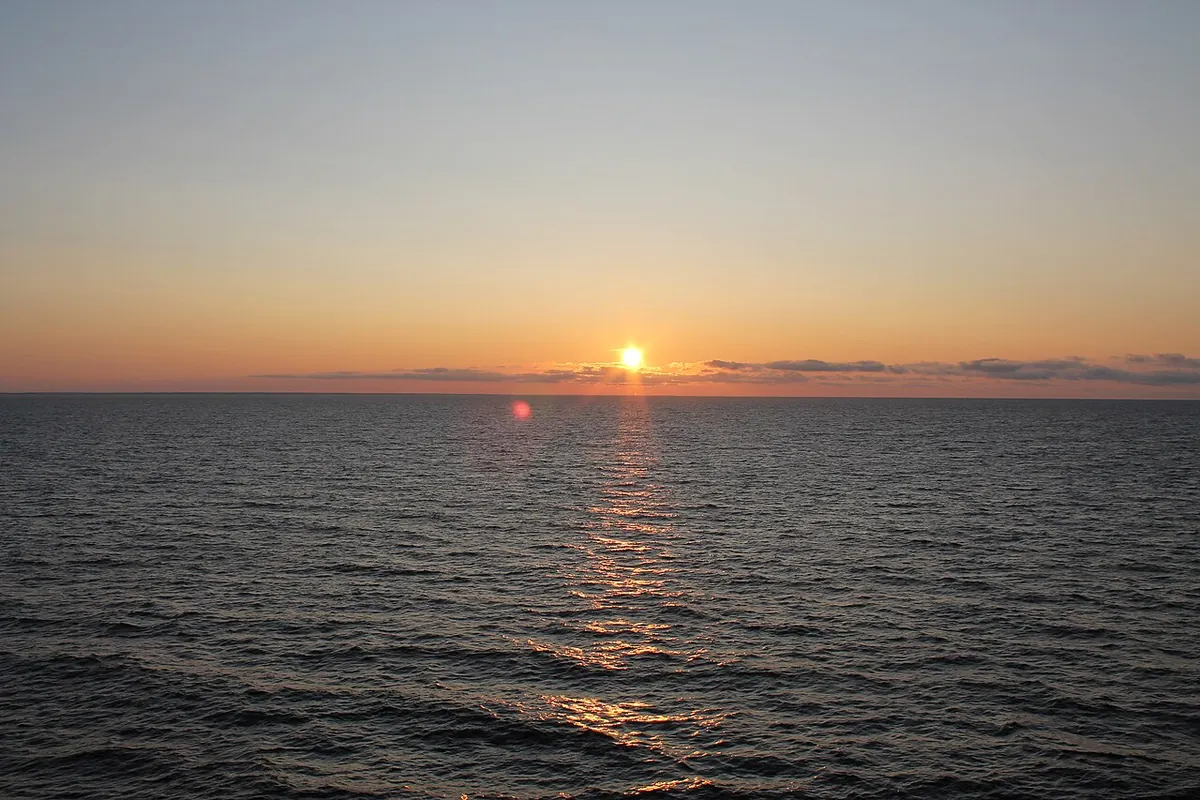
In the evening, the Sun sits low on the horizon, meaning its light travels through the atmosphere at a slant. This path is much longer than it is at midday. By the time the light reaches our eyes, almost all of the blue has been scattered away, leaving only yellow, orange, and red. Dust and tiny water droplets in the air scatter the remaining blue even further, which is why some sunsets look so vibrant.

A quick kitchen experiment
- Fill a tall, clear glass or jar with water.
- Turn off the room lights and shine a torch through the side of the glass.
- Add a teaspoon of milk and stir. The milk acts just like the air with its tiny particles.
- Look at the water from the side. It will look faintly blue, just like the daytime sky.
- Place a sheet of white paper behind the glass. The light travelling straight through all that water will now look yellowish or orange, exactly like a sunset.
- If the colour hasn’t changed much, just add a tiny bit more milk.
On Mars, it’s the exact opposite
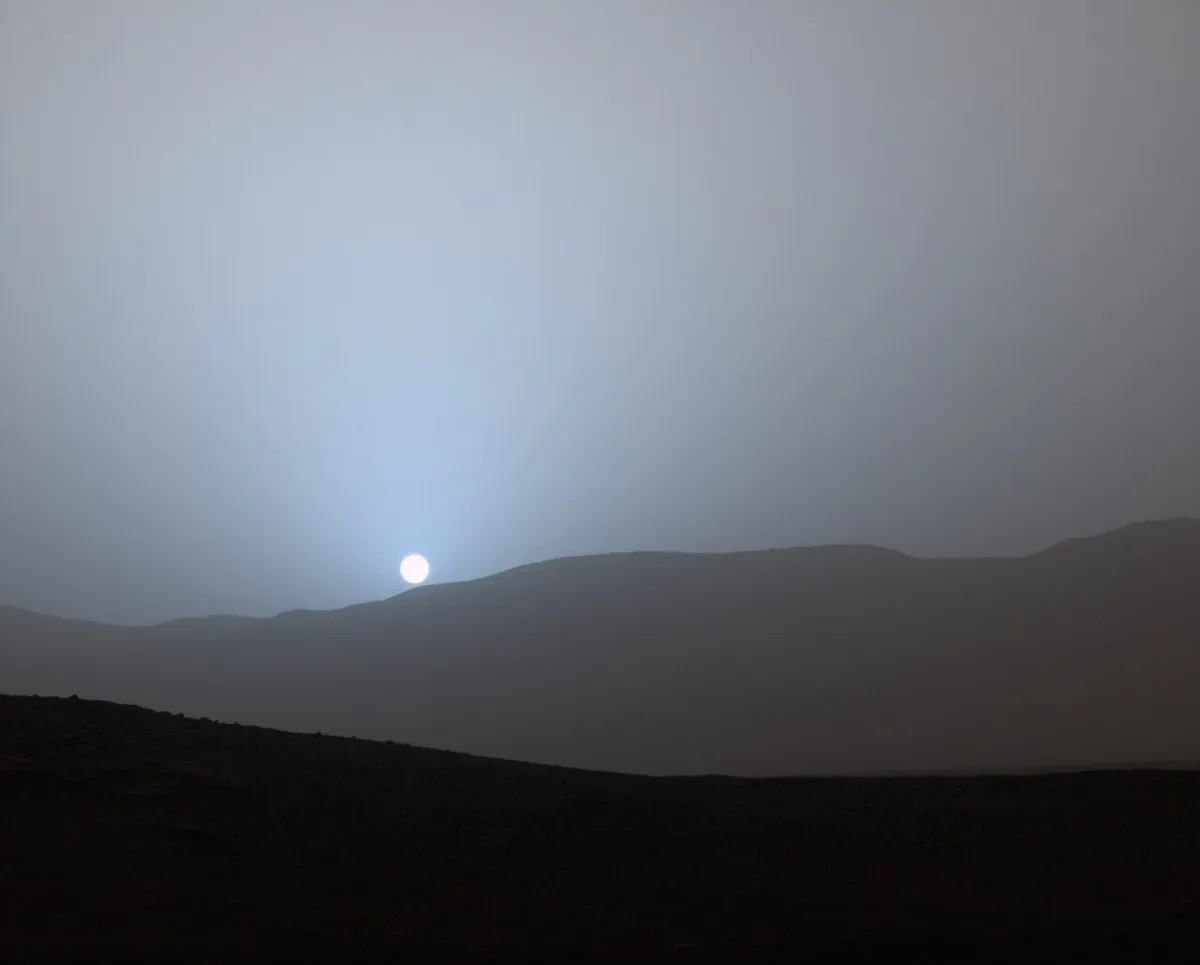
The air on Mars is extremely thin and filled with fine, hanging dust. During the day, the Martian sky is a dusty orange. But at sunset, a blue glow appears around the Sun. The fine dust allows blue light to pass forward more easily than red light, so the blue stays concentrated near the Sun, while the orange spreads out across the sky. The Curiosity rover actually photographed a sunset just like this on 15 April 2015 in Gale Crater.
This makes for a great follow-up conversation. The colour of a sky entirely depends on what a planet's air is made of. Don’t be surprised if your child’s next question is: “What does the sky look like on other planets?”