 Growney
The boy who photographed snowflakes. A bedtime story
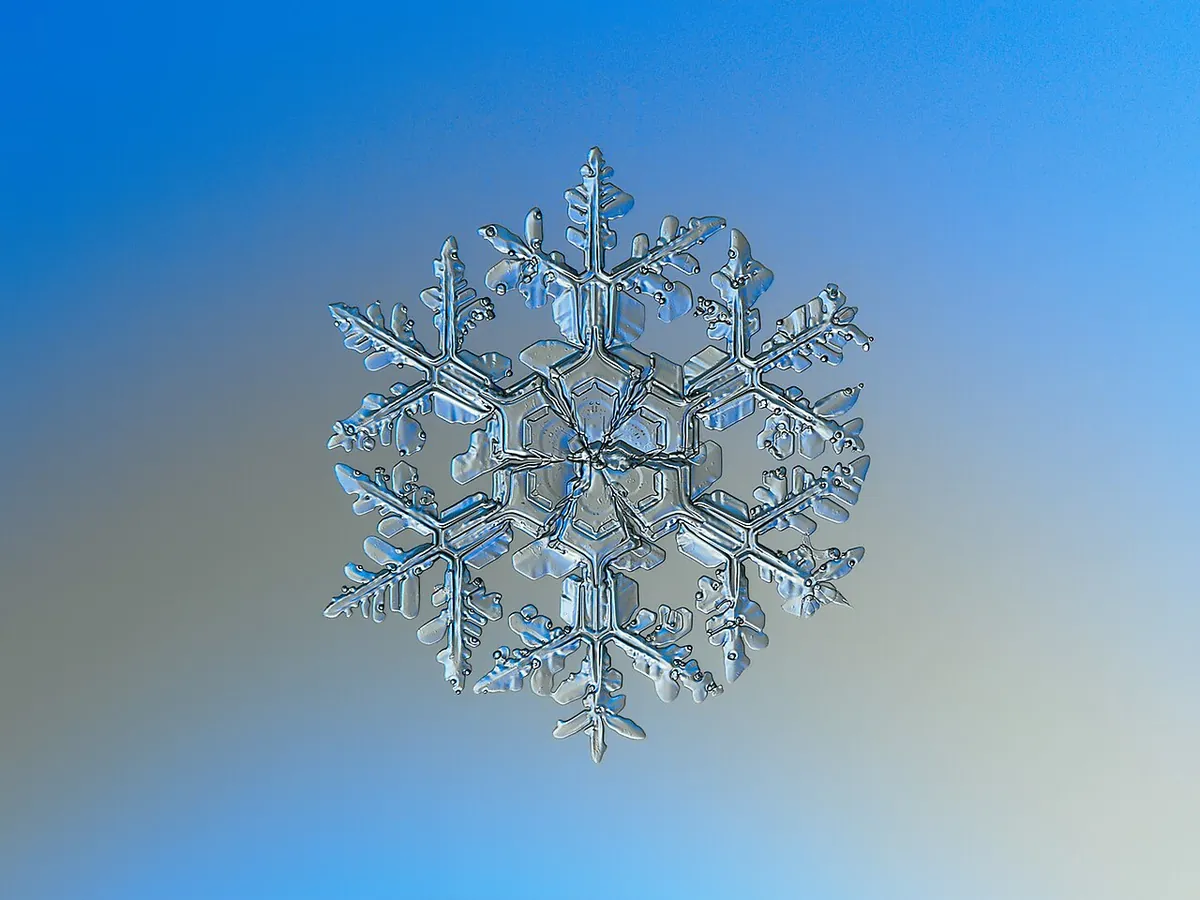

Look out of the window. Perhaps it is snowing already. Snowflakes drift down so quietly that nobody has time to look at them properly.
A long time ago, more than a hundred years ago, there lived a boy who wanted very much to look at a snowflake. His name was Wilson Bentley.
A farm full of snow
Wilson was born in 1865 and lived on a farm near the small town of Jericho, in the American state of Vermont. Winters there are long, and a great deal of snow falls. The yard, the fields, and the barn roof stayed white for months.
Wilson helped his parents on the farm. And when the work was done, he turned to the thing he loved most.
When Wilson turned fifteen, his mother gave him a microscope. A microscope makes tiny things look big, so you can see what your eyes alone cannot. Wilson looked through the glass at drops of water, feathers, and petals. He liked the snowflakes best of all.
Patterns that melt
Under the microscope, an ordinary snowflake turned into a tiny star with six arms. Thin branches grew along each arm, like the branches of a fir tree. Wilson wanted to keep these patterns, so he started to draw them.
But a snowflake melts very quickly. By the time Wilson had drawn one arm, the whole snowflake was gone. He drew again and again, and every time the snowflake melted before he could finish.
So Wilson decided to photograph a snowflake instead. A camera sees everything at once, and a hand draws slowly. He fixed a camera right onto his microscope, so he could take pictures of what he saw through the glass.
The first photo
Wilson worked in a cold shed behind the house, with no stove in it. Snowflakes melt in the warm, and in the shed they lasted longer. He caught them on a little board painted black. On black, a white snowflake is easy to see.
Then he chose one, the prettiest of all. Gently, with a feather, he moved it onto a glass slide and put it under the microscope. Warm breath can melt a snowflake, so he held his breath while he took the picture.
For a long time, nothing worked. The photos came out blurry or completely dark. But Wilson tried again, every time it snowed.
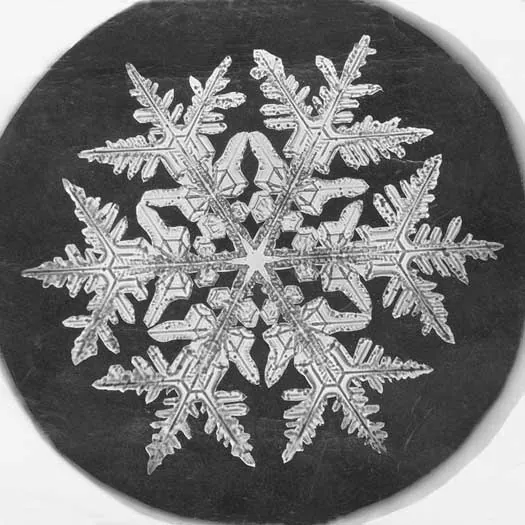

Then, on 15 January 1885, it worked. The photo showed one single snowflake, sharp and clear, with every tiny branch. It was the first photo of a single snowflake in the world. Wilson was nineteen years old.
No two the same
From then on, Wilson photographed snowflakes every winter, for the rest of his life. He took more than five thousand of these photos. He compared them carefully and never once found two the same. Every snowflake had its own pattern.
Scientists explain that snowflakes have six arms because that is how tiny bits of water fit together when they freeze. And each one is different because it falls to the ground along its own path, through slightly different air.
Some snowflakes look like little stars with branches, others like thin six-sided plates. What shape a snowflake takes depends mostly on how cold it is where it forms.
People called him Snowflake Bentley. He was proud of the name.
In summer, when there was no snow, Wilson studied raindrops and measured how big they were. He was the first person in America to make such measurements. But snowflakes always stayed closest to his heart.
Snowflakes that never melt
Wilson wanted everyone to see his snowflakes. He sent five hundred photos to the Smithsonian Institution, a great museum in Washington, so they would be kept safe. And in 1931, his book Snow Crystals came out, with more than two thousand photos of snowflakes.
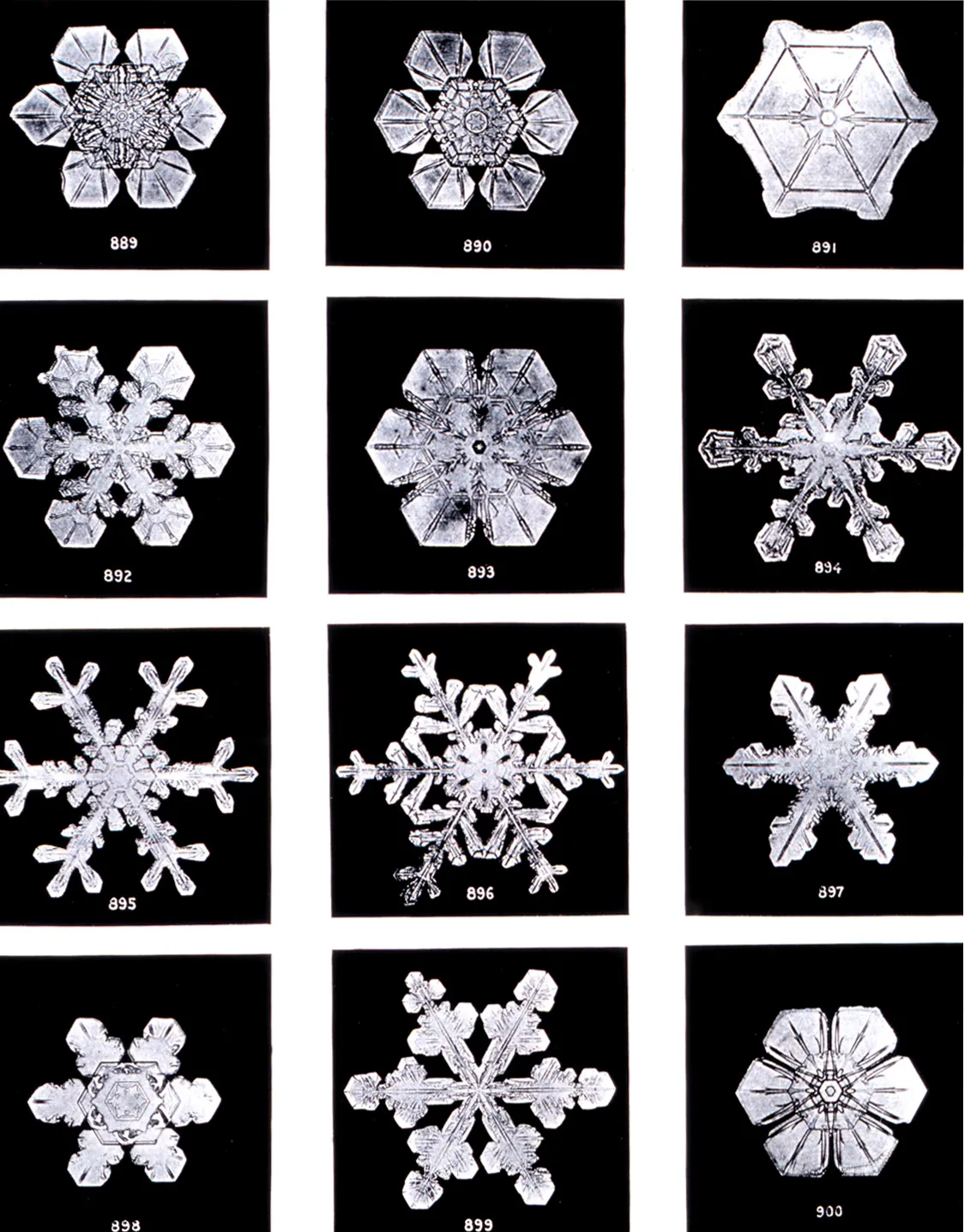

Those snowflakes melted more than a hundred years ago. But in the photos, they still look just as they did on the morning Wilson caught them. You can look at them for as long as you like, and they will never disappear.
Next time it snows, hold out a dark mitten. Perhaps a tiny star with six arms will land on it. Look at it quickly, before it melts. There has never been another snowflake quite like it.
And now it is quiet outside. The snow covers the roofs, the fields, and the trees, and everything falls asleep. Goodnight.